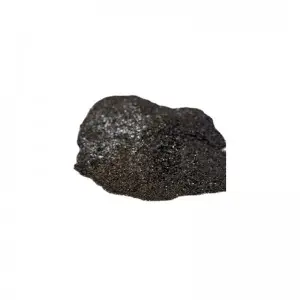
Expandable graphite is a specially treated graphite intercalation compound that contains acids or oxidizing agents inserted between graphite layers, and when it is exposed to a specific activation temperature, the interlayer compounds rapidly decompose, releasing a large volume of gas that forces the graphite structure to expand dramatically along the c-axis direction, forming a worm-like, porous material known as expanded graphite, which is widely used in fire retardant systems, sealing materials, thermal insulation, and industrial engineering applications.
Unlike natural flake graphite or microcrystalline graphite used in metallurgy or lubrication, expandable graphite is not primarily valued for its carbon content alone but for its unique expansion behavior, which transforms a dense layered structure into a highly expanded, low-density, high-surface-area material with completely new physical properties.
Understanding expandable graphite requires focusing on its transformation mechanism, industrial processing behavior, and the performance advantages it provides after expansion, especially in high-temperature safety systems and advanced material engineering.
How expandable graphite expands under heat activation
The key characteristic of expandable graphite is its thermal expansion reaction, which occurs when the intercalated chemical compounds between graphite layers reach a decomposition temperature and generate gas pressure inside the crystal structure.
● Intercalation compounds break down rapidly under heat exposure
● Large volumes of gas are released between graphite layers
● Internal pressure forces graphite layers to separate along the crystal axis
● The material expands into a worm-like or accordion-shaped structure
This process is extremely fast and irreversible, which means once expansion occurs, the graphite structure permanently changes into expanded graphite with significantly increased volume and surface area.
Structural transformation from compact graphite to expanded graphite
Before expansion, expandable graphite appears as a dense layered material where chemical agents are embedded between graphite planes, but after thermal activation, the structure changes dramatically into a porous, low-density material.
● Volume can increase many times compared to original graphite size
● Density significantly decreases after expansion
● Surface area increases dramatically due to layer separation
● Porous structure forms with high compressibility and flexibility
This transformation is the reason expanded graphite behaves very differently from traditional graphite materials in industrial applications.
Why expandable graphite is important in industrial applications
Expandable graphite is widely used in industries that require high-performance materials capable of responding to heat, pressure, and sealing requirements, especially in safety-critical systems where fire resistance and thermal insulation are essential.
● Provides excellent flame retardant performance in polymer systems
● Forms protective char layers during fire exposure
● Enhances thermal insulation in industrial equipment
● Improves sealing performance in high-temperature environments
Because of these properties, expandable graphite is widely used in fire safety engineering, building materials, and industrial sealing technologies.
Application in flame retardant and fire protection systems
One of the most important uses of expanded graphite is in flame retardant materials, where its expansion behavior helps create a protective barrier during fire exposure.
● Expands under heat to form an insulating carbon layer
● Blocks oxygen and heat transfer to underlying materials
● Reduces flame spread in polymers and composite materials
● Improves fire safety performance in construction materials
It is commonly used in fire-resistant coatings, plastic additives, cables, and insulation boards where passive fire protection is required.
Role in sealing and gasket manufacturing industries
Expanded graphite is also widely used in high-performance sealing systems due to its compressibility, flexibility, and resistance to extreme temperature conditions.
● Forms high-density sealing sheets with excellent compressibility
● Adapts to irregular flange surfaces for reliable sealing
● Maintains performance under high temperature and pressure cycles
● Resistant to chemical corrosion in industrial environments
These properties make it a key material in gasket manufacturing for petrochemical plants, power stations, and industrial piping systems.
Thermal insulation and high-temperature engineering applications
Due to its porous structure and low thermal conductivity, expanded graphite is also widely used in thermal insulation systems where heat management is critical.
● Reduces heat transfer in industrial furnaces and reactors
● Provides lightweight insulation solutions for high-temperature systems
● Improves energy efficiency in continuous thermal processes
● Maintains structural stability under extreme heat conditions
This makes it suitable for advanced industrial equipment where both thermal protection and mechanical reliability are required.
Material advantages of expanded graphite
Expanded graphite offers a unique combination of physical and chemical properties that distinguish it from conventional carbon materials.
● Extremely high surface area due to layered expansion
● Low density with high compressibility and flexibility
● Excellent thermal resistance in high-temperature environments
● Strong chemical stability in acidic and alkaline conditions
● Good adaptability for composite material integration
These advantages allow it to be used across multiple industrial sectors with different performance requirements.
Industrial processing flexibility and product forms
After expansion, graphite can be processed into different industrial products depending on application needs and performance requirements.
● Flexible graphite sheets for sealing applications
● Graphite packing materials for pumps and valves
● Flame retardant additives for polymers and plastics
● Thermal insulation boards and composite materials
This versatility makes expanded graphite a highly valuable intermediate material in advanced manufacturing systems.
Why expandable graphite is different from other graphite types
Expandable graphite should not be confused with natural flake graphite or microcrystalline graphite because its value is not based on carbon purity but on its ability to undergo controlled expansion.
● Natural graphite is mainly used for conductivity and metallurgy
● Microcrystalline graphite is used for bulk industrial carbon applications
● Expandable graphite is designed specifically for thermal activation and structural transformation
This functional difference is what makes expandable graphite unique in the graphite material family.
Conclusion
Expandable graphite is a chemically treated graphite intercalation compound that undergoes rapid thermal decomposition to produce expanded graphite with a worm-like porous structure, and this transformation gives it exceptional properties in flame retardancy, sealing, thermal insulation, and industrial engineering applications.
Its ability to expand dramatically under heat makes it a critical functional material in safety systems, high-temperature equipment, and advanced composite manufacturing, where traditional graphite forms cannot provide the same level of performance.
As industrial safety standards and material performance requirements continue to increase, expandable graphite will remain an important functional carbon material in global manufacturing industries.
FAQ
1. What is expandable graphite used for in industry?
Expandable graphite is mainly used in flame retardant materials, sealing gaskets, thermal insulation systems, and industrial safety applications where heat resistance and expansion behavior are required.
2. How does expandable graphite turn into expanded graphite?
When heated to a specific temperature, intercalated compounds inside graphite decompose and release gas, forcing graphite layers to rapidly expand into a porous, worm-like structure called expanded graphite.
3. What makes expanded graphite useful in fire protection?
Expanded graphite expands under heat to form an insulating carbon layer that blocks oxygen and heat transfer, helping to slow down flame spread in materials.
4. Is expandable graphite the same as natural graphite?
No, expandable graphite is chemically treated natural graphite designed to expand under heat, while natural graphite is used mainly for conductivity, lubrication, and metallurgical applications.
Post time: Jun-11-2026