Graphite mould plays a vital role in modern industrial manufacturing where high temperature resistance, dimensional stability, and surface quality are critical. From metal casting to semiconductor processing, graphite moulds are widely used to improve production efficiency and product consistency.
What Is a Graphite Mould and Why It Matters
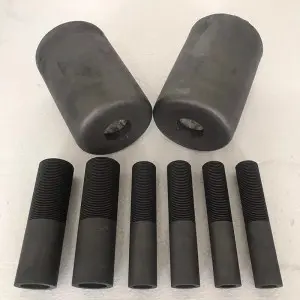
A graphite mould is a tooling component made from high-purity graphite materials, designed to shape molten metals or other high-temperature materials. Due to graphite’s unique combination of thermal conductivity, chemical stability, and machinability, it has become an essential material for precision mould applications.
Unlike traditional steel or ceramic moulds, graphite moulds offer superior resistance to thermal shock and can maintain structural integrity even under extreme temperature fluctuations. This makes them highly suitable for industries that require repeatable accuracy and clean surface finishes.
Key Properties That Define Graphite Mould Performance
The effectiveness of a graphite mould depends on several critical material properties that directly impact production outcomes:
● Excellent thermal conductivity, ensuring uniform heat distribution and reducing hotspots during casting or sintering
● High temperature resistance, allowing operation in extreme environments without deformation
● Low thermal expansion coefficient, maintaining dimensional stability under heat cycling
● Strong chemical inertness, preventing reactions with molten metals such as copper, aluminum, and precious alloys
● Good machinability, enabling precise customization for complex geometries
These characteristics make graphite moulds a reliable solution for high-performance manufacturing environments.
Types of Graphite Moulds Used in Industry
Graphite moulds are designed in various forms depending on application requirements and production processes:
● Continuous casting moulds
Used in the production of metal rods, tubes, and profiles, ensuring smooth surface finish and consistent dimensions
● Ingot casting moulds
Commonly applied in precious metal and alloy casting, providing clean surfaces and easy demoulding
● Glass forming moulds
Utilized in shaping high-temperature glass products with precision and repeatability
● Sintering moulds
Used in powder metallurgy processes, offering stability during high-temperature compaction and sintering
● Semiconductor and electronics moulds
Designed for crystal growth and wafer processing where purity and precision are essential
Each type is engineered to meet specific thermal and mechanical demands, ensuring optimal performance in its application.
Advantages of Using Graphite Mould in Industrial Production
Graphite moulds offer significant advantages over conventional mould materials, particularly in high-temperature and precision applications:
● Improved product surface quality due to smooth mould surfaces and anti-adhesion properties
● Reduced cycle times through efficient heat transfer and cooling performance
● Longer service life in high-temperature operations compared to metal moulds
● Easy release of cast parts, minimizing damage and reducing post-processing work
● Capability to handle complex shapes with high dimensional accuracy
These benefits contribute to increased productivity and lower overall manufacturing costs.
Application Areas of Graphite Mould
Graphite moulds are widely used across multiple industries, each benefiting from their unique material properties:
● Metallurgical industry
For casting non-ferrous metals such as copper, brass, aluminum, and gold
● Electrical and electronics sector
Used in the production of components requiring high conductivity and precision
● Jewelry and precious metal processing
Ideal for casting gold, silver, and platinum with fine detail and smooth finish
● Glass and ceramics industry
Provides stable shaping solutions under high-temperature conditions
● Energy and battery manufacturing
Used in processes such as lithium battery material preparation and thermal treatments
These applications demonstrate the versatility and reliability of graphite mould technology.
Factors to Consider When Using Graphite Moulds
To maximize the performance of graphite moulds, several operational factors should be carefully managed:
● Material grade selection
Different graphite grades offer varying density, purity, and strength levels, which must match application requirements
● Surface treatment
Coatings or impregnation can enhance oxidation resistance and extend mould life
● Operating temperature control
Maintaining appropriate temperature ranges helps prevent premature wear or damage
● Machining precision
High-precision machining ensures tight tolerances and consistent product quality
● Maintenance and inspection
Regular inspection helps detect wear and maintain optimal performance over time
Proper control of these factors ensures consistent results and extends the lifespan of the mould.
Future Trends in Graphite Mould Technology
With the advancement of industrial manufacturing, graphite mould technology continues to evolve to meet higher performance demands:
● Development of ultra-high purity graphite for semiconductor applications
● Improved anti-oxidation treatments for extended service life
● Integration with automated production systems for higher efficiency
● Custom-engineered mould solutions for complex and high-precision products
These trends highlight the growing importance of graphite moulds in advanced manufacturing sectors.
Conclusion
Graphite mould solutions have become indispensable in industries that require high temperature resistance, precision, and efficiency. Their superior thermal properties, chemical stability, and machinability make them an ideal choice for a wide range of applications, from metal casting to electronics manufacturing.
By selecting the right graphite grade, optimizing operational conditions, and maintaining strict quality control, businesses can fully leverage the advantages of graphite moulds to improve product quality and production efficiency.
FAQ
- What materials can be used with graphite moulds
Graphite moulds are commonly used with non-ferrous metals such as aluminum, copper, gold, and silver, as well as in glass and ceramic applications. - How long does a graphite mould last
The lifespan depends on operating conditions, temperature, and material grade, but graphite moulds generally offer longer service life in high-temperature applications compared to traditional moulds. - Can graphite moulds be customized
Yes, graphite moulds can be precisely machined to meet specific design requirements and complex geometries. - How do graphite moulds improve production efficiency
They provide better heat transfer, faster cycle times, easy demoulding, and reduced need for post-processing, all of which enhance overall efficiency.
Post time: Apr-23-2026