A Graphite Mould is often used in metal casting, glass forming, hot pressing, sintering, jewelry production, continuous casting, and other high-temperature industrial processes. For many buyers, ordering a graphite mould may seem simple at first. They may only provide a product name, an approximate size, or a photo of an old mould, expecting the same part to be produced quickly.
In real production, however, a graphite mould is not a standard consumable in many cases. It is a process-related component. Its size, cavity design, surface finish, material grade, venting structure, wall thickness, and machining tolerance can directly affect the final product quality. This is why drawings and working conditions are so important before production begins.
For buyers who want stable casting results, smooth demoulding, longer mould life, and fewer production problems, a clear drawing is not just a technical document. It is the starting point for making the right Graphite Mould.
A Small Size Error Can Become a Big Production Problem
In mould applications, even a small dimensional error may create visible defects in the final product. A cavity that is slightly too large may cause poor fit. A groove that is too shallow may affect material flow. A hole that is off-position may create installation problems. A wall section that is too thin may increase the risk of cracking during heating.
This is why rough verbal descriptions are often not enough. For example, saying “make the same graphite mould as before” does not explain the required tolerance, cavity depth, edge radius, surface condition, or assembly position.
A detailed drawing helps confirm:
- Overall length, width, and thickness;
- Cavity shape and depth;
- Hole size and position;
- Groove or channel structure;
- Edge radius and corner details;
- Surface finish requirements;
- Assembly or positioning features;
- Dimensional tolerance.
Without these details, the mould may look similar but perform differently in actual production.
Graphite Mould Design Must Match the Working Process
A Graphite Mould is not used in the same way in every industry. A mould used for glass forming has different requirements from one used for metal casting. A mould used in hot pressing may need different strength and surface contact design compared with one used for continuous casting.
Before production, buyers should explain the real working process, not only the mould shape.
Important process information includes:
- What material will be cast, pressed, or formed;
- Working temperature range;
- Heating speed and cooling method;
- Whether the mould will contact molten metal directly;
- Whether the mould will be used repeatedly or occasionally;
- Whether release agent, coating, or protective gas will be used;
- Whether the mould must fit existing equipment.
These details help determine the suitable graphite grade and machining method. If the mould material is chosen only by size, it may fail early under actual working conditions.
Why Material Grade Cannot Be Decided by Appearance
Two Graphite Mould products may look almost the same from the outside, but their internal structure and performance may be very different. Graphite density, grain size, purity, porosity, and strength all influence mould life and forming quality.
For high-precision applications, fine-grain graphite is often preferred because it supports better machining accuracy and smoother surfaces. For high-load or repeated-use applications, higher-density graphite may provide better wear resistance and structural stability. For applications that require clean processing, higher-purity graphite may be necessary to reduce contamination risk.
If the working condition is not clear, the wrong graphite grade may be selected. The mould may still be usable at the beginning, but problems can appear later, such as:
- Fast wear on the cavity surface;
- Cracking during thermal cycling;
- Poor demoulding;
- Rough product surface;
- Size change after repeated use;
- Shorter service life than expected.
This is why buyers should not judge a Graphite Mould only by price or appearance.
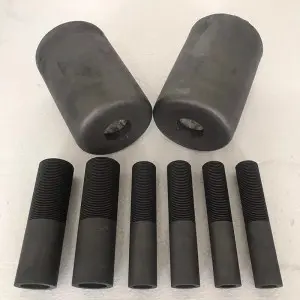
Surface Finish Affects Demoulding and Product Appearance
The surface of the graphite mould directly touches the processed material. If the cavity surface is too rough, the finished part may have marks, uneven texture, or sticking problems. If the surface is not suitable for the process, the operator may need more release agent or extra polishing after production.
However, a smoother surface is not always automatically better. Some processes require specific texture, venting lines, coating space, or controlled contact surfaces. The right surface finish depends on the material being formed and the expected final result.
A clear drawing or sample requirement helps avoid misunderstanding. Buyers should confirm whether the mould needs:
- Polished cavity surface;
- Machined texture;
- Special coating allowance;
- Rounded corners;
- Sharp edges;
- Venting grooves;
- Smooth demoulding surface.
These details may seem small, but they often decide whether the finished product needs rework.
Old Mould Samples Are Useful, But Not Always Enough
Some buyers send an old graphite mould sample and ask for the same one. This can be helpful, especially when the original drawing is missing. However, old moulds may already be worn, deformed, cracked, oxidized, or contaminated after long use.
If the new mould is copied directly from a damaged old sample, the same defects may be repeated. The worn cavity may lead to wrong dimensions. Damaged edges may be copied as part of the design. Surface defects may be mistaken as original features.
When using an old sample, it is better to explain:
- Which areas are still correct;
- Which areas are worn or damaged;
- Whether the original size should be restored;
- What problems appeared during previous use;
- Whether any design improvement is needed.
This helps turn a replacement order into a better Graphite Mould solution, instead of simply copying an old problem.
What Buyers Should Prepare Before Ordering
Before ordering a custom Graphite Mould, buyers can prepare several pieces of information to make communication faster and more accurate.
Useful information includes:
- 2D drawing or 3D model;
- Product photo or mould sample;
- Required graphite mould size;
- Material being processed;
- Working temperature;
- Furnace or equipment type;
- Expected production quantity;
- Tolerance requirement;
- Surface finish requirement;
- Previous mould problems if any.
If some information is not available, it is still useful to describe the application as clearly as possible. Good communication before production can reduce mistakes, save time, and improve final mould performance.
A Better Graphite Mould Starts Before Machining
Many mould problems are created before machining begins. If the drawing is unclear, the working condition is missing, or the material grade is chosen only by price, the finished graphite mould may not match the real process.
A reliable Graphite Mould should be designed around the final application. It should match the equipment, temperature, processed material, product shape, demoulding method, and expected service life. When buyers provide clear drawings and practical working details, the mould can be produced with better accuracy and stronger production value.
For industrial users, this means fewer trial-and-error costs, more stable product quality, and better control over daily production.
FAQ
1. Why is a drawing important for a custom Graphite Mould?
A drawing confirms the exact size, cavity shape, hole position, groove structure, tolerance, and surface requirements. Without a drawing, the finished mould may look similar but fail to match the real production process.
2. Can a Graphite Mould be made from an old sample?
Yes, an old sample can be used as a reference, but buyers should explain which areas are worn, damaged, or need improvement. Copying a damaged mould directly may repeat the same production problems.
3. What information is needed before ordering a Graphite Mould?
Buyers should provide drawings, dimensions, working temperature, processed material, equipment type, surface finish requirements, tolerance requirements, and previous mould problems if available.
4. Does graphite grade matter for a Graphite Mould?
Yes. Graphite grade affects machining accuracy, wear resistance, thermal stability, demoulding performance, and service life. The right grade should be selected according to actual working conditions.
Post time: Jul-02-2026