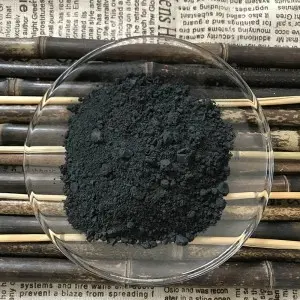
Earthen graphite, also known as microcrystalline graphite or fine natural carbon graphite, is a high-carbon industrial material with very low sulfur and iron impurities. It is widely used in metallurgy, casting, refractory systems, and industrial lubrication, and is often called “gold sand” in the graphite industry due to its stable performance and strong industrial value.
Unlike high-crystal flake graphite used in battery or electronic applications, earthen graphite is mainly used in bulk industrial production where cost efficiency, carbon stability, and impurity control are more important than crystal perfection.
High fixed carbon content drives industrial value
One of the key reasons earthen graphite is highly valued is its stable and relatively high fixed carbon content, which makes it an efficient carbon source in industrial processes.
● Provides stable carbon input in metallurgical reactions
● Improves hardness and mechanical strength of steel products
● Reduces the need for additional carbon adjustment materials
In steelmaking and foundry industries, this stability helps maintain consistent product quality across large-scale production.
Extremely low sulfur and iron content improves purity performance
Another major advantage of earthen graphite is its naturally low level of harmful impurities, especially sulfur and iron, which are critical factors in metal processing industries.
● Low sulfur content reduces brittleness in steel
● Low iron content minimizes contamination in molten metal
● Improves overall stability in high-temperature reactions
This makes it particularly suitable for applications where material purity directly affects final product quality.
Why it is called “gold sand” in the graphite market
The term “gold sand” reflects its industrial importance rather than visual appearance. It represents a material that is widely used, economically valuable, and essential in heavy industry supply chains.
● Strong demand in metallurgy and casting industries
● Stable performance in high-temperature production environments
● Cost-effective compared to high-purity engineered graphite
● Reliable supply for bulk industrial consumption
Because of these combined advantages, earthen graphite has become a foundational carbon material in global industrial production.
Industrial applications across multiple sectors
Earthen graphite is not limited to one industry. It is used in several large-scale industrial fields where carbon stability and thermal resistance are essential.
● Metallurgy and steelmaking
Used as a recarburizer to adjust carbon content in molten steel and improve mechanical strength.
● Foundry and casting industry
Applied in mold coatings and sand additives to improve surface quality and reduce casting defects.
● Refractory materials
Used in furnace linings and high-temperature bricks to improve heat resistance and structural durability.
● Industrial lubrication
Acts as a dry lubricant in high-temperature or heavy-load mechanical systems.
● Friction materials
Used in brake pads and industrial friction systems to stabilize performance under heat and pressure.
Processing flexibility for industrial use
Earthen graphite is usually processed into powder form and classified into different particle sizes depending on application requirements.
● Coarse grades for metallurgy and refractory systems
● Medium grades for casting and mold coating applications
● Fine grades for lubrication and friction materials
This flexibility allows it to be widely used across different production environments without requiring complex processing changes.
Why industries continue to rely on earthen graphite
Despite the development of advanced carbon materials, earthen graphite remains widely used because it provides a stable balance between performance and cost.
● Stable carbon performance in large-scale production
● Suitable for continuous high-temperature industrial processes
● Lower cost compared to synthetic high-purity graphite
● Reliable supply chain for heavy industry applications
It remains a core material in steel, casting, and refractory industries worldwide.
Market importance in global industrial supply chains
Earthen graphite plays an important upstream role in global manufacturing industries. Its demand is closely linked to steel production, infrastructure development, machinery manufacturing, and energy-related industries.
Because these industries require large volumes of carbon materials, earthen graphite continues to maintain stable global demand as a basic industrial raw material.
Conclusion
Earthen graphite, or microcrystalline graphite, is widely known as “gold sand” due to its high fixed carbon content, low impurity levels, and stable industrial performance. It is a key material in metallurgy, casting, refractory systems, and industrial lubrication applications.
Its value lies not in high-end precision use, but in large-scale industrial reliability, cost efficiency, and consistent performance, making it an essential part of global heavy industry supply chains.
FAQ
1. Why is earthen graphite called “gold sand”?
It is called “gold sand” because of its high carbon value, low impurities, and wide industrial usage in metallurgy and casting industries, making it highly valuable in bulk industrial production.
2. What is earthen graphite mainly used for?
It is mainly used in steelmaking as a carbon additive, in casting for mold coatings, in refractory materials for high-temperature resistance, and in industrial lubrication systems.
3. Is earthen graphite suitable for steel production?
Yes, it is widely used in steelmaking as a recarburizer to improve carbon content control and enhance steel strength and quality.
4. What makes earthen graphite different from other graphite types?
It has a microcrystalline structure and is mainly used in bulk industrial applications, while flake graphite is used in higher-end applications such as batteries and conductive materials.
Post time: Jun-05-2026