Expandable graphite is widely used in fire protection because it can expand when exposed to heat and form a protective, carbon-rich layer. However, the same material does not necessarily deliver the same results in every formulation. Its effectiveness depends on how it interacts with the surrounding materials, how the system is applied, and how it responds to fire conditions.
Understanding these differences is important when selecting expandable graphite for fire-retardant coatings, plastic composites, and other fire protection applications. Rather than evaluating the material by expansion alone, it is necessary to consider the performance of the entire system.
How Does Expandable Graphite Work in Fire Protection?
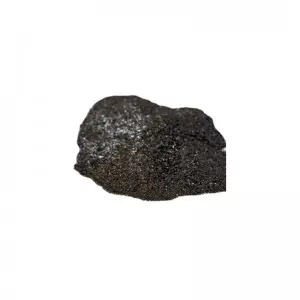
Expandable graphite is produced by introducing chemical species between the layers of natural graphite. When heated to a suitable temperature, these intercalated compounds decompose or release gases, forcing the graphite layers apart. The particles expand substantially and form a porous, worm-like structure.
In a fire protection system, this expansion can create a barrier that slows heat transfer and restricts the movement of oxygen and combustible decomposition products. The expanded layer may also help shield the underlying substrate from direct flame exposure. However, expansion volume is only one part of the process. A useful protective layer must also remain sufficiently continuous and stable during heating. If it cracks, separates from the substrate, or collapses under thermal stress, its protective effect may be reduced even when the graphite itself expands considerably.
Why Does Expandable Graphite Behave Differently Across Applications?
Fire-Retardant Coatings: Expansion and Adhesion Must Work Together
In fire-retardant coatings, expandable graphite is incorporated into a binder that holds the ingredients together and attaches the coating to the substrate. During a fire, the graphite expands while the binder softens, decomposes, or undergoes other heat-induced changes.
The formulation must balance two requirements. First, the coating needs enough expansion to build an insulating layer. Second, the resulting char must remain attached and resist cracking or erosion. Excessive expansion does not automatically mean better fire protection if the layer becomes fragile or detaches from the surface. Binder chemistry is therefore important. A binder that performs well under normal conditions may not maintain adequate cohesion at elevated temperatures. The proportions of expandable graphite and other additives also affect the coating’s viscosity, application properties, and final char structure.
Coating thickness and surface preparation matter as well. An uneven coating may produce inconsistent protection, while poor adhesion can allow the expanded layer to separate from the substrate. The complete coating system should be evaluated under the relevant fire-test conditions rather than judged solely by the graphite’s expansion characteristics.
Plastic Composites: Dispersion and Polymer Compatibility Matter
In plastic composites, expandable graphite is mixed into a polymer matrix before or during processing. Unlike a coating that forms a surface layer, the graphite is distributed throughout the material. Its performance therefore depends partly on how evenly the particles are dispersed and how the polymer behaves during heating.
If the particles are poorly dispersed, some regions may contain too little flame-retardant material to form an effective protective structure. Agglomeration can also affect mechanical properties and processing consistency. Appropriate particle size, mixing conditions, and formulation design help determine whether the additive is distributed effectively.
The polymer itself makes a difference. Different plastics soften, melt, shrink, or decompose in different ways when heated. A polymer that melts and flows may disturb the developing expanded layer, while another material may retain its shape for longer. These differences can influence whether the graphite-derived char stays in place and protects the underlying material. Expandable graphite may also affect tensile strength, impact resistance, surface appearance, or melt processing. Increasing its loading can improve certain fire-performance characteristics but may create trade-offs in mechanical properties or processability.
Elastomers and Foams: Shape Retention Becomes Critical
Elastomers and foamed materials present different challenges because their structures can be flexible, compressible, or relatively low in density. During heating, these materials may shrink, soften, release gases, or lose structural integrity. The expanding graphite must form a protective barrier despite these changes. In flexible elastomers, the additive must be compatible with the compound and sufficiently well distributed to avoid unacceptable changes in elasticity or processing behavior. In foams, the existing cellular structure can influence heat movement and the way the material collapses during exposure to fire. A high expansion ratio alone cannot establish suitability for either application. The expanded residue must remain sufficiently cohesive and cover the areas where protection is needed. Testing should reflect the actual material geometry and expected fire exposure.
Which Material Properties Have the Greatest Influence?
- Expansion onset temperature: The material should begin expanding at a temperature appropriate for the intended fire protection system. If expansion starts too early during processing, it may interfere with manufacturing. If it starts too late under the relevant fire conditions, protective-layer formation may be delayed.
- Expansion volume and residue stability: A high expansion volume can help create a thicker insulating barrier, but the expanded residue must also resist cracking, erosion, and collapse. A stable layer may provide more consistent protection than a larger but fragile structure.
- Particle size and distribution: Particle size affects dispersion, surface texture, and the structure of the expanded residue. Coarser and finer grades can behave differently in coatings and polymers, so selection should consider both processing requirements and the intended protective mechanism.
- Compatibility with other ingredients: Binders, polymers, fillers, and additional flame retardants can influence expansion and char formation. An ingredient that improves one property may interfere with another, making formulation-level testing essential.
No single specification can reliably predict performance across every fire protection system.
How Can Formulation and Processing Change the Final Result?
The performance of expandable graphite is influenced not only by the material grade but also by how it is incorporated into the product. Mixing intensity, processing temperature, residence time, coating application, and curing conditions can all affect the final structure.
For plastic composites, processing conditions must be sufficient to distribute the particles without unnecessarily exposing the additive to temperatures that could trigger premature expansion. For coatings, mixing and application need to maintain uniform distribution and consistent film thickness. In both cases, poor processing can prevent the material from delivering the performance expected from its technical specifications. The heating environment is another important variable. Heating rate, exposure duration, flame direction, and the substrate’s thermal behavior influence how quickly the protective layer develops and how long it remains effective. Results from one test configuration should not automatically be applied to another.
Fire testing can be combined with assessments of adhesion, mechanical properties, dimensional stability, and processing behavior. This approach reveals whether a formulation provides a workable balance between fire protection and product requirements.
How Should Expandable Graphite Be Selected for Different Systems?
Selection should begin with the function of the finished product, not simply with the highest available expansion ratio. For coatings, priorities may include adhesion, char integrity, and application consistency. For plastic composites, dispersion, processing temperature, mechanical properties, and resistance to melting or dripping may be equally important. For elastomers and foams, flexibility, density, and the ability to retain a protective residue can become central considerations.
Small-scale trials can identify compatibility and processing issues before larger production runs. The final choice should be based on verified performance in the actual product design and applicable fire-test standards.
Conclusion
Expandable graphite can contribute to fire protection by expanding under heat and forming a barrier that limits heat transfer and the movement of combustible products. However, its performance varies across coatings, plastic composites, elastomers, and foams because each system has different material interactions, structural requirements, and processing conditions.
The most suitable grade is not necessarily the one with the greatest expansion volume. Reliable results depend on expansion behavior, residue stability, particle distribution, compatibility, and the performance of the complete formulation. Evaluating these factors together helps determine whether expandable graphite can provide effective and practical fire protection in a specific application.
FAQs
1. Does a higher expansion ratio always mean better fire resistance?
No. Expansion ratio alone does not show whether the protective layer will remain attached, resist cracking, or withstand the fire exposure. The structure and stability of the expanded residue are also important.
2. Can the same expandable graphite grade be used in coatings and plastics?
Sometimes, but suitability should not be assumed. Coatings and plastic composites have different processing conditions and structural requirements. The grade should be assessed for its expansion temperature, particle characteristics, compatibility, and performance in each formulation.
3. Why can expandable graphite affect the mechanical properties of plastics?
Expandable graphite is a solid additive within the polymer matrix. Its loading, particle distribution, and interaction with the polymer can change the material’s stiffness, strength, impact resistance, and processing behavior. Formulation testing is needed to balance these properties with fire performance.
Post time: Oct-20-2026