Flexible graphite sheet is a high-performance sealing and thermal material made from expanded graphite that is compressed into dense, flexible sheets, and it is widely used in industrial gasket manufacturing, high-temperature sealing systems, chemical processing equipment, and mechanical engineering applications because it combines excellent thermal resistance, chemical stability, and compressibility in a single material that can perform reliably under extreme operating conditions where conventional sealing materials often fail.
Unlike rigid graphite blocks or raw graphite flakes, flexible graphite sheets are engineered materials that are designed specifically for sealing performance, meaning their structure is optimized to provide controlled compressibility, uniform density, and long-term stability under pressure, temperature cycling, and chemical exposure, making them a critical material in modern industrial sealing technology.
Understanding flexible graphite sheet requires examining its structure, performance behavior, industrial applications, and why it has become a standard solution in industries where leakage control and high-temperature resistance are essential.
How flexible graphite sheet is manufactured from expanded graphite
The production of flexible graphite sheet begins with natural graphite, which is chemically treated to form expandable graphite, then rapidly heated to produce expanded graphite, and finally compressed under high pressure into continuous sheet form without using rubber or organic binders.
● Natural graphite is chemically intercalated and expanded under heat
● Expanded graphite particles form a worm-like, porous structure
● High-pressure compression transforms expanded graphite into dense sheets
● The final product contains no organic binders in high-purity grades
This binder-free structure is one of the key reasons flexible graphite sheet performs well under extreme temperatures, because there are no polymer materials that can degrade or burn.
Why flexible graphite sheet is ideal for high-temperature sealing systems
One of the most important advantages of flexible graphite sheet is its ability to maintain sealing integrity under continuous high-temperature conditions where many conventional sealing materials such as rubber, PTFE, or fiber-based gaskets fail.
● Can operate in high-temperature environments without melting or degrading
● Maintains compressibility and sealing strength during thermal cycling
● Resists thermal shock in furnace and reactor systems
● Does not become brittle under repeated heating and cooling cycles
Because of these properties, flexible graphite sheets are widely used in industries such as petrochemical processing, power generation, metallurgy, and industrial furnace systems.
Excellent chemical resistance in aggressive industrial environments
Flexible graphite sheets also perform extremely well in chemically aggressive environments, which makes them suitable for sealing applications involving acids, alkalis, solvents, and corrosive gases.
● Resistant to most industrial acids and alkaline solutions
● Stable in chemical processing pipelines and reactor systems
● Reduces leakage risk in corrosive fluid transportation systems
● Maintains performance in long-term chemical exposure conditions
This chemical stability allows flexible graphite sheets to be used in environments where rubber or polymer-based sealing materials would degrade rapidly.
Superior compressibility and sealing adaptability
One of the most important functional advantages of flexible graphite sheet is its ability to compress and conform to irregular flange surfaces, which ensures tight sealing even in imperfect mechanical conditions.
● High compressibility allows tight sealing under low bolt load
● Adapts to surface imperfections on flanges and joints
● Maintains rebound performance after compression
● Reduces leakage risk in vibrating or high-pressure systems
This makes it especially valuable in industrial piping systems, pump housings, valve assemblies, and heat exchanger applications.
Applications in industrial gasket and sealing manufacturing
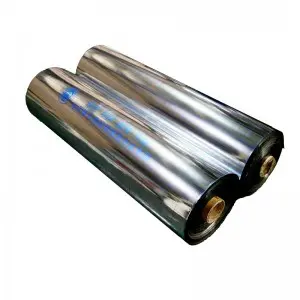
Flexible graphite sheet is one of the most widely used raw materials in gasket manufacturing, where it is cut and shaped into sealing components for various industrial systems.
● Flange gaskets for pipelines and pressure vessels
● Valve stem seals and pump sealing components
● High-temperature furnace door sealing systems
● Heat exchanger gasket materials
Because it can be easily cut, laminated, and combined with metal reinforcement, flexible graphite sheet is widely used in both standardized and custom gasket production.
Role in power plants and energy systems
Flexible graphite sheets are widely used in power generation systems where equipment operates under high pressure and high temperature conditions for long periods of time.
● Steam pipeline sealing systems in power plants
● Turbine and boiler gasket applications
● High-pressure valve sealing in energy systems
● Long-term stable sealing in continuous operation environments
These applications require materials that can maintain reliability over long maintenance cycles, making flexible graphite sheet a preferred choice.
Industrial advantages compared to traditional sealing materials
Flexible graphite sheet offers several advantages over traditional sealing materials such as rubber, PTFE, asbestos-based materials, and fiber composites.
● Higher temperature resistance than rubber and PTFE
● Better chemical stability than fiber-based materials
● Longer service life under continuous industrial operation
● Reduced maintenance frequency and downtime costs
● Better sealing consistency under pressure fluctuations
These advantages make it a preferred sealing solution in modern industrial design and maintenance engineering.
Thermal conductivity and heat distribution control
Flexible graphite sheet also has excellent thermal conductivity, which allows it to distribute heat evenly across sealing surfaces and reduce localized thermal stress.
● Improves heat distribution in sealing interfaces
● Reduces thermal deformation in high-temperature equipment
● Enhances stability in cyclic heating systems
● Supports energy efficiency in thermal processing systems
This property is particularly important in furnace systems and heat exchanger applications where thermal balance is critical.
Customization and industrial processing flexibility
Flexible graphite sheets can be processed into a wide range of industrial sealing products depending on application requirements.
● Can be reinforced with stainless steel mesh for added strength
● Can be laminated into multi-layer gasket structures
● Can be cut into complex sealing shapes using CNC systems
● Can be combined with other materials for hybrid sealing solutions
This flexibility makes it suitable for OEM manufacturers, industrial maintenance companies, and engineering service providers.
Why industries rely on flexible graphite sheet for critical systems
Industries rely on flexible graphite sheet because it provides a rare combination of thermal stability, chemical resistance, mechanical flexibility, and long service life, making it suitable for critical systems where failure is not an option.
● Ensures long-term sealing reliability in harsh environments
● Reduces risk of leakage in high-pressure systems
● Performs consistently under thermal cycling conditions
● Supports safety-critical industrial operations
These characteristics make it a core material in modern industrial sealing technology.
Conclusion
Flexible graphite sheet is a high-performance engineered material derived from expanded graphite, designed specifically for industrial sealing and high-temperature applications, and it provides outstanding performance in terms of thermal resistance, chemical stability, compressibility, and long-term reliability, making it an essential material in industries such as petrochemicals, power generation, metallurgy, and mechanical engineering.
As industrial systems continue to operate under more demanding conditions, flexible graphite sheet will remain a key sealing solution supporting safety, efficiency, and operational stability across global manufacturing industries.
FAQ
1. What is flexible graphite sheet used for?
Flexible graphite sheet is mainly used for manufacturing gaskets, sealing materials, and thermal insulation components in high-temperature and high-pressure industrial systems.
2. Why is flexible graphite sheet suitable for high temperatures?
It can withstand extreme temperatures without melting or degrading, and it maintains stable sealing performance even under continuous thermal cycling.
3. Can flexible graphite sheet resist chemicals?
Yes, it has strong resistance to acids, alkalis, and most industrial chemicals, making it suitable for chemical processing and petrochemical applications.
4. What is the advantage of flexible graphite sheet compared to rubber gaskets?
Flexible graphite sheet offers much higher temperature resistance, better chemical stability, and longer service life compared to rubber-based sealing materials, especially in harsh industrial environments.
Post time: Jun-17-2026