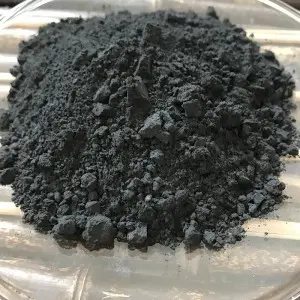
Earthen graphite, also commonly referred to as microcrystalline graphite or amorphous natural graphite in industrial markets, is a naturally occurring carbon material with a fine crystalline structure and relatively high carbon content, making it widely used in metallurgy, casting, refractory production, lubrication systems, and carbon additive applications across global industries.
Unlike high-purity flake graphite that is often used in precision applications such as conductive materials and advanced electronics, earthen graphite is more commonly used in bulk industrial processes where cost efficiency, carbon stability, and functional performance under high temperature conditions are more important than structural perfection, which makes it an essential raw material in heavy industry supply chains.
Understanding what earthen graphite is used for in industry requires a clear view of how its physical and chemical characteristics translate into practical industrial value, especially in large-scale manufacturing environments where material consistency and performance reliability directly impact production efficiency.
Understanding Earthen Graphite in Industrial Context
Earthen graphite is formed through natural geological processes that produce fine, compact graphite deposits with relatively small crystalline structures compared to flake graphite, and this structural difference gives it distinct industrial advantages in applications that require stable carbon content rather than precision material properties.
In industrial usage, earthen graphite is typically processed into powder form and adjusted into different mesh sizes depending on the application requirements, which allows manufacturers to control its performance in combustion systems, metal processing, coating materials, and friction-related applications.
Because of its stable carbon composition and relatively low production cost, earthen graphite is widely considered a functional industrial carbon material rather than a high-end engineered graphite product, which is why it plays a critical role in large-volume industrial manufacturing sectors.
Main Industrial Uses of Earthen Graphite
Earthen graphite is used in multiple industrial sectors, each of which relies on its carbon-rich structure and thermal stability to improve process efficiency, product quality, or material performance under demanding conditions.
● Metallurgy and steelmaking as a carbon additive
Earthen graphite is widely used in steel production and foundry operations as a recarburizing agent that helps adjust carbon content in molten metal, improve hardness, and enhance mechanical strength of finished steel products, making it an important auxiliary material in metallurgical processes.
● Foundry industry for casting and molding applications
In casting production, earthen graphite is used in mold coatings and sand casting additives where it helps improve surface finish quality, reduce metal penetration into molds, and enhance release performance, which ultimately reduces defects and improves casting efficiency.
● Refractory materials for high-temperature industrial systems
Earthen graphite is added to refractory bricks and lining materials used in furnaces, kilns, and high-temperature reactors where it enhances thermal resistance, improves structural stability, and reduces material degradation under continuous heat exposure.
● Lubrication applications in heavy machinery and industrial equipment
Due to its layered carbon structure, earthen graphite functions as a dry lubricant in industrial machinery, reducing friction between moving parts in environments where oil-based lubricants may fail due to high temperature or contamination risks.
● Brake and friction material production
Earthen graphite is used in brake pads and friction systems where it helps stabilize friction performance, reduce wear, and improve heat dissipation during braking operations in automotive and industrial machinery systems.
● Battery and energy storage supporting materials
In some industrial energy applications, earthen graphite is used as a carbon-based additive to support conductivity and structural stability in battery components, particularly in large-scale or industrial-grade energy storage systems.
Why Industries Prefer Earthen Graphite
Industries choose earthen graphite not because it offers the highest purity or the most advanced structural properties, but because it provides a balanced combination of cost efficiency, thermal stability, and functional carbon performance that is suitable for large-scale production environments.
In heavy industries such as steelmaking, foundry production, and refractory manufacturing, material consumption volumes are extremely high, which means cost per ton and functional reliability become more important than fine material engineering characteristics, making earthen graphite an economically efficient solution.
Another important reason for its widespread industrial use is its ability to perform consistently under high-temperature conditions, which allows manufacturers to maintain stable production processes without frequent material failure or performance variation.
Industrial Processing and Material Handling of Earthen Graphite
Earthen graphite is typically processed into different mesh sizes and purity levels depending on its final industrial application, and this processing flexibility allows it to be adapted for various production environments without requiring complex chemical modification.
● Coarse powder grades are commonly used in metallurgical carbon adjustment and refractory production
● Medium mesh grades are often used in foundry coatings and casting surface treatment
● Fine powder grades are used in lubrication systems and friction material manufacturing
In industrial supply chains, earthen graphite is usually stored and transported in bulk packaging forms such as ton bags or large sacks, which supports efficient handling for large-scale manufacturing operations.
Performance Characteristics That Define Industrial Value
The industrial value of earthen graphite is determined by several key physical and chemical characteristics that directly influence how it behaves in high-temperature and high-load environments.
● Stable carbon content that supports metallurgical reactions and material strengthening
● High temperature resistance that allows use in furnace and refractory systems
● Chemical stability under basic industrial processing conditions
● Layered structure that provides natural lubrication in mechanical systems
● Cost-effective raw material availability for bulk industrial consumption
These characteristics make earthen graphite particularly suitable for industries where functional performance and economic efficiency must be balanced at scale.
Market Role of Earthen Graphite in Global Industry
In the global industrial supply chain, earthen graphite plays a foundational role as a bulk carbon material used in upstream production processes, especially in regions with strong steel, casting, and refractory industries.
Its demand is closely linked to industrial growth in infrastructure, automotive manufacturing, machinery production, and energy systems, as all of these sectors rely heavily on steel and metal processing where carbon additives and high-temperature materials are essential.
As industrial production continues to expand in emerging markets, the demand for earthen graphite remains stable due to its cost advantage and essential functional role in multiple manufacturing processes.
Conclusion
Earthen graphite is a fundamental industrial carbon material widely used in metallurgy, casting, refractory production, lubrication systems, friction materials, and energy-related applications, and its value lies in its ability to deliver stable carbon performance under high-temperature and large-scale industrial conditions.
Unlike high-precision graphite materials used in electronics or advanced engineering, earthen graphite serves as a cost-effective and functionally reliable material that supports the backbone of heavy industrial manufacturing, making it an indispensable part of global industrial supply chains.
FAQ
1. What is earthen graphite mainly used for in industry?
Earthen graphite is mainly used as a carbon additive in steelmaking, a coating material in casting, a component in refractory products, and a dry lubricant in industrial machinery applications.
2. Is earthen graphite the same as flake graphite?
No, earthen graphite has a finer microcrystalline structure and lower structural order compared to flake graphite, which makes it more suitable for bulk industrial applications rather than high-precision uses.
3. Why is earthen graphite used in steel production?
Earthen graphite is used in steel production because it helps adjust carbon content in molten metal, improving hardness, strength, and overall mechanical performance of steel products.
4. Can earthen graphite withstand high temperatures?
Yes, earthen graphite has strong thermal stability and can be used in high-temperature industrial environments such as furnaces, kilns, and refractory systems without significant performance degradation.
Post time: May-26-2026