Natural flake graphite is one of the most important industrial carbon materials used across metallurgy, energy storage, lubrication, refractory systems, and advanced manufacturing industries, and its unique crystalline structure makes it highly valuable in applications that require stable conductivity, thermal resistance, and chemical durability under demanding operating conditions.
Unlike microcrystalline or amorphous graphite, natural flake graphite is characterized by its distinctive flake-like crystal morphology, which provides higher purity potential, better electrical conductivity, and stronger structural integrity, making it suitable for both traditional heavy industry and emerging high-tech applications.
For B2B buyers and industrial manufacturers, understanding the characteristics and applications of natural flake graphite products is essential for selecting the right grade, optimizing production efficiency, and ensuring long-term material stability in industrial processes.
Understanding Natural Flake Graphite as an Industrial Material
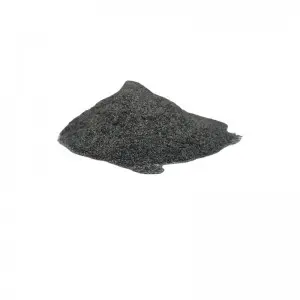
Natural flake graphite is formed through high-grade metamorphic geological processes where carbon-rich materials are subjected to high temperature and pressure over long periods, resulting in well-structured crystalline graphite that appears in flake-like formations with relatively high carbon content and strong anisotropic properties.
In industrial supply chains, natural flake graphite is typically processed into different purity levels and particle sizes depending on its intended application, ranging from coarse flakes used in refractory and metallurgical applications to fine powders used in batteries, conductive materials, and advanced composites.
Because of its structural integrity and versatility, natural flake graphite serves as a foundational raw material in both traditional manufacturing industries and modern technological sectors.
Key Performance Characteristics of Natural Flake Graphite
The industrial value of natural flake graphite is defined by its physical and chemical properties, which allow it to perform effectively in a wide range of harsh environments and functional applications.
● High electrical conductivity due to crystalline structure
Natural flake graphite exhibits excellent electrical conductivity along its layered crystal planes, making it suitable for conductive materials, electrodes, and energy storage systems where stable electron transfer is required.
● Strong thermal resistance for high-temperature environments
It can withstand extreme temperatures without melting or losing structural integrity, which makes it ideal for furnace applications, refractory systems, and high-temperature industrial processes.
● Excellent chemical stability in corrosive environments
Natural flake graphite resists most acids and alkalis, allowing it to maintain performance in chemical processing industries where material degradation is a major concern.
● High lubricity and low friction characteristics
Due to its layered structure, graphite flakes slide easily against each other, providing natural lubrication that reduces wear in mechanical systems and dry lubrication applications.
● Expandable processing adaptability for industrial use
Natural flake graphite can be further processed into expandable graphite, graphite powder, or purified graphite products, enabling a wide range of downstream industrial applications.
Industrial Applications of Natural Flake Graphite Products
Natural flake graphite is widely used across multiple industries, and its application value varies depending on purity level, particle size, and processing method, which allows it to serve both heavy industry and advanced material sectors.
● Metallurgy and steel production industry
Natural flake graphite is used in steelmaking and casting processes as a carbon additive and protective material, helping to improve carbon content control, enhance steel hardness, and stabilize molten metal behavior during production.
● Refractory materials for high-temperature systems
It is widely used in refractory bricks, furnace linings, and high-temperature insulation materials where it improves thermal resistance, structural strength, and overall durability under continuous heat exposure.
● Energy storage and battery industry applications
High-purity natural flake graphite is a key material in lithium-ion batteries and energy storage systems, where it serves as an anode material that supports efficient ion transfer and stable electrochemical performance.
● Lubrication and friction reduction systems
Natural flake graphite is used as a dry lubricant in industrial machinery, especially in high-temperature or high-load environments where traditional lubricants may fail or degrade.
● Conductive materials and industrial coatings
Due to its electrical conductivity, it is used in conductive coatings, antistatic materials, and composite systems where controlled electrical performance is required.
● Advanced composite and thermal management materials
Natural flake graphite is increasingly used in thermal interface materials and composite structures where both heat dissipation and mechanical stability are required.
Processing Forms of Natural Flake Graphite
Natural flake graphite is not limited to a single industrial form, and its versatility allows it to be processed into multiple product types that serve different industrial needs.
● Flake graphite concentrates for metallurgical and refractory use
● Fine graphite powders for lubrication and coating applications
● High-purity graphite for battery and electronic applications
● Expanded graphite for sealing and thermal insulation materials
● Customized graphite products for engineered industrial components
This flexibility in processing makes natural flake graphite a highly adaptable raw material in global industrial supply chains.
Industrial Value and Market Importance
Natural flake graphite plays a strategic role in both traditional industrial manufacturing and emerging technology sectors, which gives it a dual-market importance that continues to grow with global industrial development.
In traditional industries such as steelmaking, foundry production, and refractory manufacturing, it serves as a cost-effective functional material that improves process efficiency and product quality.
In modern industries such as electric vehicles, renewable energy systems, and advanced electronics, it serves as a critical raw material for battery production and thermal management systems, making it an essential component in the global energy transition.
The combination of industrial reliability and technological relevance ensures that natural flake graphite remains in strong global demand.
Factors That Affect Product Performance and Selection
When selecting natural flake graphite products for industrial use, several key factors must be considered to ensure optimal performance and cost efficiency in production environments.
● Carbon content level, which directly affects purity and conductivity performance
● Flake size distribution, which influences processing behavior and end-use suitability
● Ash and impurity content, which impacts performance in high-precision applications
● Moisture content and processing stability, which affect storage and handling efficiency
● Application-specific requirements, such as battery-grade or metallurgical-grade specifications
Proper selection of graphite grade is essential for achieving stable production outcomes and avoiding material inefficiencies in industrial systems.
Why Natural Flake Graphite Is Widely Preferred in Industry
Natural flake graphite is widely preferred because it provides a rare combination of functional performance, processing flexibility, and industrial cost efficiency, making it suitable for both large-scale manufacturing and high-value technical applications.
Its ability to perform under extreme temperature conditions, combined with its electrical and thermal properties, allows it to serve multiple roles within a single industrial system, reducing the need for multiple specialized materials.
In addition, its availability in multiple grades and processing forms makes it highly adaptable to different industrial requirements, from heavy metallurgy to advanced energy technologies.
Conclusion
Natural flake graphite is a highly versatile industrial carbon material that plays a critical role in metallurgy, refractory systems, energy storage, lubrication, and advanced composite manufacturing, and its unique flake crystal structure provides superior electrical, thermal, and chemical performance across a wide range of industrial applications.
As global industries continue to evolve toward higher efficiency, cleaner energy systems, and advanced manufacturing technologies, natural flake graphite products will remain an essential raw material supporting both traditional industrial production and next-generation technological development.
FAQ
1. What is natural flake graphite mainly used for in industry?
Natural flake graphite is mainly used in steelmaking as a carbon additive, in refractory materials for high-temperature resistance, in lithium-ion batteries for energy storage, and in lubrication and conductive industrial applications.
2. What makes flake graphite different from other types of graphite?
Flake graphite has a well-defined crystalline flake structure that provides higher purity potential, better conductivity, and stronger mechanical stability compared to amorphous or microcrystalline graphite.
3. Is natural flake graphite suitable for battery production?
Yes, high-purity natural flake graphite is widely used in lithium-ion batteries as an anode material due to its excellent conductivity and stable electrochemical properties.
4. Can natural flake graphite withstand high temperatures?
Yes, natural flake graphite has excellent thermal stability and can maintain its structure and performance under very high temperatures, making it suitable for furnace and refractory applications.
Post time: May-28-2026