Selecting Expandable Graphite is not simply a matter of checking fixed carbon content, nor does a higher expansion volume automatically mean better performance. Different grades of Expandable Graphite may look very similar, yet differences in initial expansion temperature, expansion volume, particle size, and sulfur content can lead to very different results in flame-retardant coatings, plastics, rubber, sealing materials, and other applications.
For practical use, the key is whether Expandable Graphite matches both the processing temperature and the final service temperature. The material should remain stable during manufacturing but expand effectively when thermal protection is required. For this reason, a combined “temperature–expansion–particle size” framework is more useful than comparing a single specification.
Four Key Parameters for Expandable Graphite
When selecting Expandable Graphite, four specifications should be considered together:
| Parameter | What It Means | Why It Matters |
|---|---|---|
| Initial expansion temperature | Temperature at which noticeable expansion begins | Determines whether premature expansion may occur during processing |
| Expansion volume | Volume produced by a unit mass after heating, usually expressed in ml/g | Indicates the ability to form an expanded protective structure |
| Particle size | Size of the original graphite flakes or particles | Affects dispersion, surface quality, and processing |
| Sulfur content and purity | Level of sulfur and other impurities | Important for applications sensitive to corrosion, contamination, or emissions |
These specifications are closely related. For example, Expandable Graphite with a high expansion volume may still be unsuitable if its initial expansion temperature is below the processing temperature of a plastic material, because premature expansion could occur during extrusion or molding.
Conversely, if the initial expansion temperature is too high, the graphite may respond too slowly when thermal protection is actually required.
Therefore, the relationship between specifications matters more than the highest individual value.
Initial Expansion Temperature Determines When the Material Activates
Expandable graphite is produced by introducing intercalating substances between graphite layers. When heated to a sufficient temperature, pressure builds between these layers and forces the graphite to expand in the thickness direction, producing a loose, worm-like expanded structure.
The initial expansion temperature can therefore be regarded as the activation temperature of Expandable Graphite.
Low-temperature expandable graphite begins expanding earlier and may be suitable for systems that require rapid formation of a protective layer. High-initial-temperature grades are more appropriate for plastics, rubber, and other materials processed at relatively high temperatures because they reduce the risk of premature expansion during manufacturing.
Different products may, for example, have parameters such as:
- Low-temperature grades beginning expansion at approximately 80–150°C;
- High-initial-temperature grades beginning around 290–300°C;
- Some high-temperature grades reaching expansion volumes above 230 ml/g;
- Certain low-temperature products reaching around 250 ml/g under specified high-temperature test conditions.
These figures should never be compared without considering the test conditions. The important questions are whether the manufacturing temperature remains below the initial expansion temperature and whether the final heat exposure is sufficient to activate the graphite effectively.
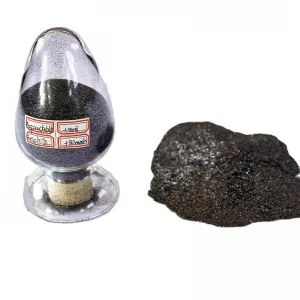
Expansion Volume Should Be Evaluated Together With the Protective Layer
Expansion volume is generally expressed in ml/g. A value such as 200 ml/g describes the bulk volume that a given mass of expandable graphite can form after heating under specified test conditions.
In flame-retardant systems, Expandable Graphite rapidly increases in volume and forms a porous carbon layer. This layer can create a physical barrier between the base material and an external heat source, making expansion capability an important performance parameter.
However, a higher expansion volume does not necessarily produce better practical performance.
Other factors also matter:
- Expandable graphite loading in the formulation;
- Available space for expansion;
- Structural stability of the expanded carbon layer;
- Thickness of the coating or composite;
- Restriction created by the surrounding matrix;
- Actual heating rate.
For example, flame-retardant coatings may require the carbon layer to form rapidly and remain relatively intact. Engineering plastics, however, must also ensure that the graphite does not begin expanding during normal processing.
A more meaningful specification is therefore effective expansion volume at a clearly stated test temperature, rather than simply the highest available expansion value.
Particle Size Affects Processing, Not Just Expansion
Even within the same Expandable Graphite category, large-flake and fine-particle grades can behave very differently during production.
Larger graphite flakes retain more of the original layered structure and can often produce a more pronounced expanded form. However, large particles may be harder to disperse evenly in thin coatings, rubber compounds, or fine polymer formulations.
Fine expandable graphite is easier to incorporate into some detailed formulations and may provide better surface control. For example, a fine grade around 300 mesh may be used in certain flame-retardant coating systems. Its expansion volume may be lower than that of large-flake high-expansion grades, but its processing compatibility can be better.
Particle-size selection should consider:
- Ease of dispersion in the matrix;
- Effect on coating or product surface quality;
- Stability of automatic feeding;
- Risk of sedimentation or segregation;
- Maximum particle size permitted in the finished product;
- Required expansion performance.
Therefore, large flake, high expansion volume, and fine particle size represent different selection directions. Each is intended to solve a different processing problem.
When Is Low-Sulfur Expandable Graphite Needed?
Expandable Graphite is generally produced from natural flake graphite through an intercalation process, so sulfur content can become an important specification in certain applications.
Standard flame-retardant systems may focus mainly on expansion volume and initial expansion temperature. In applications more sensitive to corrosion, contamination, or emissions, however, low-sulfur grades may be more appropriate.
Some low-sulfur expandable graphite grades, for example, can control sulfur content to ≤0.02%.
Whether such a low sulfur level is necessary should depend on the actual application. If the process is not sensitive to sulfur, specifying an unnecessarily low sulfur content may not provide a corresponding improvement in functional performance.
Which Parameters Matter Most for Different Applications?
Instead of evaluating every Expandable Graphite grade using the same priorities, it is more useful to define the important parameters according to the application.
Flame-Retardant Coatings
Particle size, initial expansion temperature, expansion volume, and dispersion in the coating are particularly important. Oversized particles may affect surface quality, while an excessively high activation temperature may delay formation of the protective layer.
Engineering Plastics and Rubber
The processing temperature should be checked first. The initial expansion temperature of the expandable graphite should remain safely above the normal processing range while particle size must also be compatible with the polymer matrix.
Sealing and Intumescent Materials
Expansion volume, the structure formed after expansion, and long-term temperature conditions are often more important. The material should be able to form a stable expanded graphite structure at the required location.
Impurity-Sensitive Industrial Systems
In addition to expansion behavior, fixed carbon, sulfur, ash, and other impurity levels should be evaluated carefully.
FAQ
1. Is a higher expansion volume always better for Expandable Graphite?
No. Expansion volume should be evaluated together with initial expansion temperature, available expansion space, graphite loading, and the structure of the final protective layer. A higher ml/g value alone does not guarantee better performance.
2. Why does Expandable Graphite have different initial expansion temperatures?
Different intercalation systems and production processes create different thermal activation conditions. Low-temperature grades activate earlier, while high-temperature grades are better suited to materials that must undergo higher processing temperatures.
3. Do larger Expandable Graphite particles provide better expansion?
Not necessarily. Large flakes may retain the layered graphite structure more effectively, while finer particles can offer better dispersion in coatings, plastics, rubber, and other fine formulations. Particle size should match the final process.
4. What are the most important parameters when comparing Expandable Graphite grades?
The most useful comparison includes initial expansion temperature, expansion volume at a specified temperature, particle size, fixed carbon, moisture, and sulfur content, together with the actual processing temperature and final application.
Post time: Aug-13-2026