Graphite carburizer has become an essential additive in modern metallurgical and foundry industries, especially where precise carbon control and high-quality metal performance are required. As steelmaking and casting processes continue to demand higher efficiency and cleaner results, the role of graphite carburizer is increasingly critical.
What Is Graphite Carburizer and Why It Is Used
Graphite carburizer, also known as a carbon additive, is a material used to increase the carbon content in molten metal, particularly in iron and steel production. It is typically made from high-purity graphite sources such as petroleum coke, pitch coke, or natural graphite, processed to achieve stable carbon content and low impurity levels.
In many metallurgical processes, raw materials may not provide sufficient carbon levels. Graphite carburizer is added to compensate for carbon loss during melting, refining, or casting, ensuring that the final metal composition meets required specifications.
Key Characteristics of High-Quality Graphite Carburizer
The performance of graphite carburizer depends on several important physical and chemical properties:
● High fixed carbon content, ensuring effective carbon absorption into molten metal
● Low sulfur and low nitrogen levels, reducing the risk of contamination in steel and iron
● Good graphitization degree, allowing faster dissolution and better carbon transfer
● Controlled particle size, improving absorption rate and reducing material waste
● Minimal ash content, preventing slag formation and improving metal purity
These characteristics are crucial for achieving consistent metallurgical results and maintaining product quality.
Functions of Graphite Carburizer in Metallurgical Processes
Graphite carburizer plays multiple roles in foundry and steelmaking operations, contributing to both process stability and product performance:
● Adjusting carbon content
It ensures that molten metal reaches the desired carbon level, which is critical for mechanical strength and hardness.
● Improving metal structure
Proper carbon distribution enhances microstructure formation, leading to better mechanical properties in cast products.
● Enhancing fluidity of molten metal
Graphite carburizer can improve flow characteristics, making it easier to fill molds and reduce casting defects.
● Reducing production costs
By optimizing carbon addition, it reduces reliance on more expensive raw materials.
● Minimizing impurities
High-quality carburizers help maintain cleaner metal compositions, improving overall product reliability.
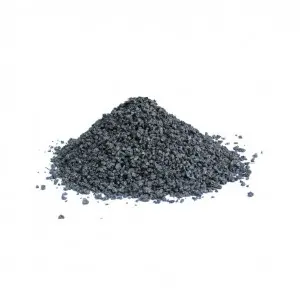
Types of Graphite Carburizer Used in Industry
Different types of graphite carburizers are available depending on production methods and application needs:
● Calcined petroleum coke carburizer
Widely used due to stable carbon content and cost-effectiveness
● Graphitized petroleum coke carburizer
Offers higher graphitization degree and better absorption performance
● Natural graphite carburizer
Provides excellent lubrication and high carbon purity for specialized applications
● Synthetic graphite carburizer
Used in high-end applications requiring extremely low impurity levels
Each type has its own advantages, and selection depends on process requirements and quality targets.
Factors Affecting Carburizer Performance
To achieve optimal results, several operational factors must be carefully controlled during the use of graphite carburizer:
● Addition method
Whether added before, during, or after melting affects absorption efficiency
● Temperature of molten metal
Higher temperatures generally improve dissolution and carbon uptake
● Stirring conditions
Proper mixing ensures uniform carbon distribution
● Particle size selection
Fine particles dissolve faster, while larger particles may reduce oxidation loss
● Contact time
Sufficient interaction time allows for complete carbon absorption
Managing these variables is essential for maximizing carburizer efficiency.
Advantages of Using Graphite Carburizer
Compared with traditional carbon additives, graphite carburizer offers several benefits:
● Higher carbon recovery rate, improving efficiency
● Faster dissolution in molten metal, reducing process time
● Lower impurity levels, enhancing metal quality
● Better control of final carbon composition
● Reduced slag formation and cleaner production environment
These advantages make graphite carburizer a preferred choice in modern foundry operations.
Applications of Graphite Carburizer
Graphite carburizer is widely used in various metallurgical and industrial processes:
● Cast iron production
Ensures proper carbon content for strength and machinability
● Steelmaking
Used to adjust carbon levels in electric arc furnaces and ladle refining
● Foundry casting
Improves casting quality and reduces defects
● Alloy production
Helps achieve precise chemical compositions
● Recycling of scrap metal
Restores carbon levels lost during remelting
Its versatility makes it suitable for both large-scale industrial production and specialized applications.
Future Trends in Graphite Carburizer Development
As industries move toward higher efficiency and environmental sustainability, graphite carburizer technology is evolving:
● Development of ultra-low impurity carburizers for high-end steel production
● Optimization of particle size for faster absorption and reduced waste
● Integration with automated dosing systems for precise control
● Increased use of eco-friendly production processes
These advancements will further enhance the role of graphite carburizer in modern metallurgy.
Conclusion
Graphite carburizer is a key material for controlling carbon content and improving metal quality in metallurgical processes. Its high carbon content, low impurity levels, and excellent absorption performance make it indispensable in steelmaking and casting industries.
By selecting the appropriate type, controlling operational conditions, and ensuring consistent quality, manufacturers can significantly improve production efficiency and product performance. As metallurgical technologies continue to advance, graphite carburizer will remain a fundamental component in achieving high-quality, cost-effective metal production.
FAQ
- What is the main purpose of graphite carburizer
The main purpose is to increase and control the carbon content in molten metal during steelmaking and casting processes. - How does graphite carburizer improve metal quality
It enhances carbon distribution, reduces impurities, and improves mechanical properties of the final product. - What factors affect the absorption rate of graphite carburizer
Temperature, particle size, mixing conditions, and addition timing all influence absorption efficiency. - Can graphite carburizer be used in all types of metal production
It is mainly used in iron and steel production, but also applicable in alloy manufacturing and metal recycling processes.
Post time: Apr-28-2026