Graphite powder is widely used across industries where thermal stability, conductivity, and lubrication performance are critical. From automotive components to advanced electronics and metallurgical processes, the consistency and quality of graphite powder supply directly influence product reliability and manufacturing efficiency.
Ensuring a stable supply of high-quality graphite powder is not simply about sourcing materials; it requires a systematic approach covering raw material selection, processing control, testing, and logistics management.
The Importance of Quality in Graphite Powder Supply
In industrial applications, even minor variations in graphite powder quality can lead to significant performance differences in the final product. For example, inconsistent particle size distribution may affect coating uniformity, while impurities can reduce electrical conductivity or introduce unwanted reactions during high-temperature processing.
High-quality graphite powder ensures:
● Stable thermal conductivity in heat management systems
● Consistent lubrication performance in mechanical applications
● Reliable electrical conductivity in electronic components
● Reduced defect rates in metallurgical and casting processes
Because graphite powder often serves as a functional material rather than a simple filler, maintaining strict quality standards is essential for long-term operational success.
Understanding Key Quality Parameters of Graphite Powder
Graphite powder quality is defined by several interrelated parameters, each of which plays a specific role in determining its performance:
● Particle size distribution
Particle size affects flowability, packing density, and surface area. Fine powders provide better dispersion and coating performance, while coarser powders may enhance structural stability in certain applications.
● Purity level
High carbon content is critical for applications requiring conductivity or chemical stability. Trace impurities such as ash, silica, or metal oxides can negatively affect performance.
● Crystalline structure
Graphite exists in different crystal forms, such as hexagonal or rhombohedral structures. These structures influence mechanical strength, thermal conductivity, and lubrication behavior.
● Surface area and morphology
The shape and surface characteristics of graphite particles determine how well they interact with binders, resins, or other materials in composite systems.
Understanding these parameters allows manufacturers and end-users to align graphite powder specifications with application requirements.
Expanded Sample Data: Graphite Powder Quality Comparison
To better illustrate quality differences, consider the following expanded comparison of graphite powder grades:
| Grade | Particle Size (Microns) | Purity (%) | Crystalline Structure | Application Suitability |
|---|---|---|---|---|
| A | 5–15 | 99.5 | Hexagonal | Electronics, high-end coatings |
| B | 10–20 | 98.2 | Rhombohedral | General industrial use |
| C | 15–25 | 97.8 | Amorphous | Refractory and casting fillers |
| D | 3–10 | 99.8 | Highly ordered | Lithium battery materials |
| E | 20–40 | 96.5 | Mixed | Lubrication and sealing |
This comparison highlights how different grades are tailored to specific industrial needs, reinforcing the importance of selecting the right specification.
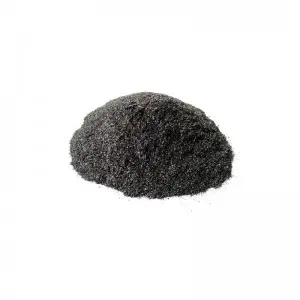
Best Practices for Ensuring Graphite Powder Quality
Maintaining consistent graphite powder quality requires a comprehensive strategy that integrates sourcing, testing, and process control.
● Establish strict raw material selection criteria
The quality of graphite powder begins with the raw graphite ore or precursor material. Ensuring consistent feedstock quality reduces variability in the final product and simplifies downstream processing.
● Implement advanced processing technologies
Modern grinding, classification, and purification technologies help achieve precise particle size control and high purity levels. Controlled milling processes prevent contamination and maintain structural integrity.
● Conduct multi-stage quality testing
Quality assurance should not rely on a single test. Instead, a combination of analytical methods ensures comprehensive evaluation:
● X-ray diffraction (XRD) for crystalline structure analysis
● Scanning electron microscopy (SEM) for morphology observation
● Laser particle size analysis for distribution accuracy
● Thermal analysis for stability assessment
● Maintain controlled production environments
Dust, moisture, and external contaminants can compromise graphite powder quality. Clean production environments and standardized operating procedures are essential.
● Standardize packaging and transportation
Improper packaging can lead to contamination or moisture absorption. Use sealed, moisture-resistant packaging materials and ensure proper labeling for traceability.
Handling and Storage Optimization
Even high-quality graphite powder can degrade if not handled correctly after production. Proper storage and logistics management are critical to maintaining its performance characteristics.
● Store in dry, temperature-controlled environments to prevent oxidation or moisture absorption
● Avoid cross-contamination by using dedicated storage containers
● Implement FIFO (first in, first out) inventory management to maintain freshness
● Minimize exposure to air during handling to preserve purity
These practices help ensure that the graphite powder maintains its original specifications throughout its lifecycle.
Industry-Specific Quality Requirements
Different industries impose unique requirements on graphite powder, which must be considered when managing supply:
● Electronics industry
Requires ultra-high purity and fine particle sizes to ensure conductivity and precision
● Metallurgical and casting industry
Focuses on thermal resistance, lubrication, and anti-adhesion performance
● Energy storage (batteries)
Demands highly controlled particle size and crystalline structure for electrochemical performance
● Mechanical applications
Prioritizes lubrication properties and wear resistance
Understanding these requirements allows businesses to align supply strategies with end-use performance expectations.
Risk Management in Graphite Powder Supply Chains
Supply chain disruptions can significantly impact production schedules and product quality. Implementing risk management strategies helps maintain stability:
● Diversify sourcing channels to reduce dependency on a single supplier
● Maintain safety stock levels for critical applications
● Establish long-term supply agreements for consistency
● Monitor global graphite market trends and price fluctuations
A proactive approach to supply chain management ensures continuity and reduces operational risks.
Conclusion
Ensuring the quality of graphite powder supply requires a holistic approach that integrates raw material control, advanced processing, rigorous testing, and proper handling practices. High-quality graphite powder is not only defined by its physical and chemical properties but also by the consistency and reliability of its supply.
By focusing on key parameters such as particle size, purity, and crystalline structure, and by implementing best practices across the supply chain, businesses can achieve superior product performance and operational efficiency. In increasingly competitive industrial environments, a stable and high-quality graphite powder supply is a critical factor in maintaining product excellence and long-term success.
Post time: Apr-21-2026