Selecting the right mould material is a critical decision in industrial casting processes. Both graphite moulds and steel moulds are widely used across industries such as automotive, aerospace, electronics, and metalworking. Each offers distinct advantages depending on production requirements, cost considerations, and product complexity. Understanding the differences between these two materials enables B2B manufacturers to optimize efficiency, reduce defects, and improve product quality.
Understanding Graphite Moulds
Graphite moulds are known for their exceptional thermal performance and chemical stability. They are commonly used in precision casting applications where surface finish and dimensional accuracy are essential.
Key Benefits of Graphite Moulds
● Superior Thermal Conductivity: Graphite enables rapid heat transfer, accelerating cooling and reducing cycle times in casting processes
● Excellent Surface Finish: Its smooth, non-reactive surface helps achieve high-quality finishes with minimal post-processing
● Chemical Inertness: Graphite does not react with most molten metals, ensuring purity and reducing contamination risks
● Dimensional Stability: Low thermal expansion allows accurate reproduction of complex geometries
● Lightweight Structure: Easier handling compared to steel moulds, reducing labor intensity
Limitations of Graphite Moulds
● Lower Mechanical Strength: Graphite is brittle and more prone to cracking under mechanical stress
● Higher Initial Cost: Material and machining costs are generally higher than steel
● Limited Lifespan in High-Pressure Applications: Not ideal for extremely high mechanical load conditions
Understanding Steel Moulds
Steel moulds are widely used in mass production due to their durability and strength. They are especially suitable for high-volume manufacturing environments.
Key Benefits of Steel Moulds
● High Durability: Steel moulds can withstand repeated use over long production cycles
● Mechanical Strength: Suitable for high-pressure and high-impact casting processes
● Cost Efficiency Over Time: Lower initial cost and longer lifespan reduce overall production costs
● Structural Stability: Maintains shape under heavy loads and complex industrial conditions
Limitations of Steel Moulds
● Lower Thermal Conductivity: Slower heat dissipation leads to longer cooling times
● Heavier Weight: More difficult to handle and transport, increasing operational effort
● Potential Chemical Reaction: Steel may react with certain alloys, affecting casting quality
● Surface Finish Limitations: May require additional finishing processes
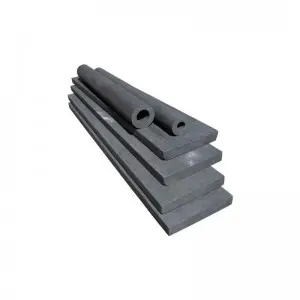
Graphite vs Steel Moulds: Performance Comparison
When comparing graphite and steel moulds, it is important to evaluate performance based on specific production needs.
● Thermal Efficiency: Graphite performs better in rapid cooling and heat transfer
● Durability: Steel offers superior lifespan in high-volume production
● Precision: Graphite is ideal for intricate and detailed components
● Cost Consideration: Steel is more economical for long-term mass production
● Operational Flexibility: Graphite is easier to machine and customize
Application-Based Selection Strategy
Different industries prioritize different performance factors. Choosing the right mould material depends on application scenarios.
● Precision Casting and Electronics: Graphite moulds are preferred due to superior surface finish and thermal performance
● Automotive and Heavy Machinery: Steel moulds are ideal for durability and large-scale production
● Jewelry and Complex Components: Graphite ensures detailed replication and minimal defects
● High-Volume Manufacturing: Steel moulds provide long-term cost advantages
Operational Impact on Manufacturing Efficiency
The choice between graphite and steel moulds directly affects production efficiency, defect rates, and overall cost structure.
● Cycle Time Reduction: Graphite moulds enable faster cooling, increasing throughput
● Maintenance Requirements: Steel moulds require less frequent replacement
● Quality Consistency: Graphite improves surface quality and reduces post-processing
● Energy Consumption: Faster heat transfer with graphite can reduce energy usage
Conclusion
Graphite moulds and steel moulds each offer distinct advantages that cater to different industrial needs. Graphite moulds excel in thermal conductivity, precision, and surface quality, making them ideal for complex and high-accuracy applications. In contrast, steel moulds provide unmatched durability and cost-efficiency for high-volume manufacturing.
For B2B companies, the optimal choice depends on balancing performance requirements with cost considerations. By aligning mould selection with production goals, manufacturers can significantly improve efficiency, reduce defects, and enhance product quality. Understanding these differences is essential for making strategic decisions in modern casting operations.
FAQ
Q: Which mould type is better for high-precision components?
A: Graphite moulds are better suited for high-precision applications due to their dimensional stability and superior surface finish.
Q: Are steel moulds more cost-effective than graphite moulds?
A: For large-scale production, steel moulds are generally more cost-effective due to their durability and long service life.
Q: Can graphite moulds be used for all types of metals?
A: Graphite moulds are compatible with most metals, but their performance depends on temperature and mechanical stress conditions.
Q: How do I decide between graphite and steel moulds for my production line?
A: The decision should be based on production volume, required precision, budget, and operating conditions such as temperature and pressure.
Post time: Mar-17-2026