A graphite crucible plays an important role in metal melting and high-temperature processing. Its performance depends not only on the graphite itself but also on its composition, manufacturing process, and compatibility with the materials being heated. Understanding these factors helps explain why different graphite crucibles behave differently under similar operating conditions.
What Is a Graphite Crucible?
A graphite crucible is a heat-resistant container commonly used to melt metals and hold materials during high-temperature processes. Graphite is widely used in crucible manufacturing because it combines good thermal conductivity with resistance to high temperatures. These properties allow heat to transfer efficiently through the crucible while helping it maintain its structure during heating.
However, graphite crucibles are not all made in the same way. Their composition may include graphite, clay, silicon carbide, or other materials, depending on the intended application. These differences influence thermal behavior, chemical resistance, durability, and overall performance. Choosing a suitable crucible therefore requires an understanding of both the material and the melting process.
Key Properties of Graphite Crucibles
Several material characteristics influence how a graphite crucible performs during use:
Thermal conductivity: Graphite transfers heat efficiently, supporting more uniform heating of the material inside the crucible.
High-temperature resistance: Graphite can withstand demanding thermal conditions, although actual performance depends on the crucible formulation and operating environment.
Chemical compatibility: Different metals and molten materials interact differently with crucible materials. Compatibility is important for reducing unwanted reactions and contamination.
Thermal shock resistance: Rapid temperature changes can create stress within the crucible. Its composition and structure influence how well it handles these changes.
Mechanical strength: The crucible must maintain its shape during handling, heating, and pouring. Material quality and manufacturing consistency affect its resistance to cracking and physical damage.
These properties work together rather than independently. For example, a crucible with good thermal conductivity may still perform poorly if it is exposed to an incompatible molten material or repeated temperature changes that exceed its capabilities.
How Graphite Crucible Composition Affects Performance
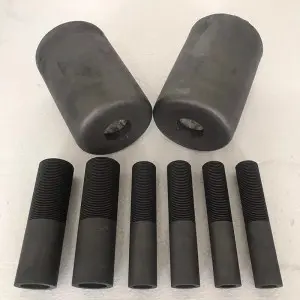
The composition of a graphite crucible has a direct influence on its behavior during melting. Clay-graphite crucibles combine graphite with clay-based materials, creating a structure suited to various traditional metal-melting applications. Silicon carbide graphite crucibles incorporate silicon carbide to improve certain characteristics, including resistance to wear and thermal stress. High-purity graphite materials may be used where material purity and contamination control are particularly important.
No single composition is ideal for every application. The choice depends on the metal being melted, the surrounding atmosphere, heating conditions, and the expected duration of use. Understanding these differences helps explain why crucibles designed for one process may not be appropriate for another.
Factors Affecting Graphite Crucible Performance
In addition to material composition, operating conditions play a significant role in crucible service life and performance.
Atmosphere and oxidation: Graphite can oxidize when exposed to oxygen at elevated temperatures. The surrounding atmosphere and protection methods can therefore affect material loss and durability. Uneven heating or sudden cooling may create thermal stress, increasing the risk of cracks. Certain metals, fluxes, and chemical compounds may react with the crucible or affect its surface. Impacts, improper lifting, and unsuitable storage can damage the crucible before or during use. Material distribution, forming methods, and firing conditions influence structural consistency and resistance to damage.
These factors are closely connected. Even a well-made crucible can experience reduced service life if the operating environment is unsuitable. In contrast, appropriate handling and controlled heating can help maintain its performance throughout repeated use.
Common Applications of Graphite Crucibles
Graphite crucibles are used in metal casting, laboratory melting, jewelry production, and other high-temperature applications. They may be used for melting aluminum and certain non-ferrous metals, as well as for processing precious metals when the crucible material is compatible with the application.
The requirements vary by industry. Foundry operations may prioritize durability and resistance to thermal cycling, while laboratory work may place greater emphasis on material purity and minimizing contamination. In jewelry production, crucible size, handling convenience, and compatibility with the metal being melted may be important considerations. Understanding the purpose of the process helps determine which crucible characteristics matter most. A crucible should be evaluated in the context of its intended use rather than by material name alone.
Conclusion
Graphite crucible performance is shaped by the interaction between material composition, thermal properties, chemical compatibility, and operating conditions. Graphite provides useful heat-transfer and high-temperature characteristics, but the complete crucible structure determines how these properties translate into practical performance. Understanding these factors makes it easier to evaluate crucibles for different melting and high-temperature applications.
Frequently Asked Questions
1.What is a graphite crucible used for?
A graphite crucible is mainly used to melt metals and contain materials during high-temperature processing. Common applications include foundries, laboratories, jewelry production, and metal casting.
2.What is the difference between clay-graphite and silicon carbide graphite crucibles?
Clay-graphite crucibles combine graphite with clay-based materials, while silicon carbide graphite crucibles include silicon carbide to influence properties such as wear resistance and thermal performance. The appropriate type depends on the application and operating conditions.
3.Can graphite crucibles be used for melting aluminum?
Yes. Graphite crucibles are commonly used for aluminum melting, provided the crucible material is suitable for the process and is used under appropriate operating conditions.
4.What affects the service life of a graphite crucible?
Service life depends on material composition, oxidation, temperature changes, chemical compatibility, handling, and manufacturing quality. Appropriate heating practices and careful handling can help reduce damage.
Post time: Oct-15-2026