High-temperature sealing failures are often caused by more than extreme heat alone. Continuous temperature changes, pressure fluctuations, chemical exposure, and mechanical movement can gradually affect sealing materials, leading to leakage, reduced equipment efficiency, and increased maintenance requirements. For many industrial systems, choosing a sealing material that can maintain stability during long-term operation is more important than simply selecting a material with a high temperature rating.
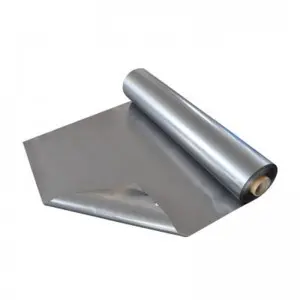
Graphite Paper is used in demanding sealing applications because its unique layered structure allows it to maintain flexibility, adapt to surface changes, and provide stable sealing performance under suitable conditions. Compared with many traditional sealing materials, graphite paper works differently by relying on its compression characteristics and structural stability rather than softening or melting at high temperatures.
Why Do Traditional Sealing Materials Fail in High-Temperature Environments?
Many conventional sealing materials are designed to provide effective sealing under normal operating conditions. However, when exposed to continuous high temperatures, their physical properties may gradually change.
One common problem is the loss of elasticity. Materials that rely on flexibility to maintain contact pressure may become harder or less responsive after prolonged heat exposure. As equipment expands and contracts during thermal cycles, the sealing material may no longer compensate for surface movement, increasing the possibility of leakage.
Another challenge is compression deformation. When a sealing material remains under pressure for an extended period, it may experience permanent deformation and lose its ability to recover its original shape. This issue is especially important in systems that operate continuously and require long service intervals.
Chemical exposure can also affect sealing performance. Depending on the application, sealing materials may come into contact with steam, oils, fuels, gases, or industrial chemicals. A material that performs well in one environment may not provide the same stability in another.
How Does Graphite Paper Solve These Sealing Challenges?
The performance of graphite paper comes from its internal layered structure. Manufactured from expanded graphite, graphite paper contains flexible graphite layers that can move slightly against each other. This allows the material to adjust to minor surface irregularities while maintaining contact between sealing surfaces.
During installation, graphite paper is compressed between connected components. Instead of depending on material softening, it forms a sealing barrier through controlled compression and surface adaptation. This characteristic helps it maintain sealing contact when equipment experiences temperature fluctuations.
Thermal expansion is another important consideration in industrial equipment. Components such as valves, pipelines, and heat-processing systems often change dimensions during operation. Rigid sealing materials may crack or lose contact when these changes occur, while graphite paper can accommodate certain movements because of its flexible structure.
However, graphite paper performance is not determined by temperature resistance alone. The actual sealing result depends on material quality, operating atmosphere, compression conditions, and compatibility with the sealed medium.
Three Factors That Determine Graphite Paper Sealing Performance
Density and Structure Balance
Density is an important factor affecting graphite paper performance, but higher density does not always mean better sealing results. A very dense material may provide higher strength but reduced flexibility, while a lower-density material may offer better adaptability but less mechanical stability.
The ideal balance depends on the application. Sealing systems with uneven surfaces may require better flexibility, while high-pressure environments may require stronger structural support. Understanding the working conditions is essential when selecting graphite paper.
Thickness and Compression Behavior
Thickness directly affects how graphite paper fills sealing gaps and responds to compression. A thicker material may provide better compensation for larger surface irregularities, but excessive thickness can influence installation conditions and compression control.
In precision sealing applications, the relationship between thickness, compression rate, and equipment design is particularly important. Selecting the wrong thickness may result in insufficient sealing pressure or unnecessary material deformation.
Purity and Material Consistency
The quality of graphite material also affects long-term sealing performance. Purity, carbon content, moisture level, and production consistency can influence how graphite paper performs under heat and pressure.
For industrial applications requiring stable operation, consistent material characteristics are often more important than simply choosing the lowest-cost option. Reliable performance depends on whether the material can maintain its properties throughout the expected service period.
Where Does Graphite Paper Provide the Most Value?
Valve and Pipeline Sealing
Valves and pipelines often operate under changing pressure and temperature conditions. Sealing materials used in these systems need to maintain contact even when components experience repeated expansion and contraction.
Graphite paper can be used in suitable valve and pipeline sealing applications because it can adapt to surface changes while maintaining compression. However, the selection should consider the transported medium, pressure level, temperature range, and sealing design.
High-Temperature Equipment Connections
Industrial equipment such as furnaces, thermal systems, and processing machinery often requires sealing materials that can withstand continuous heat exposure. In these applications, sealing failure may affect production efficiency and equipment safety.
Graphite paper provides a practical option where flexibility and temperature resistance are both required. Its ability to maintain contact during thermal cycling makes it suitable for certain high-temperature connection points.
Heat Exchangers and Industrial Systems
Heat exchangers and thermal processing systems frequently operate under demanding conditions. Sealing materials must handle temperature changes while preventing leakage between different sections of the equipment.
Graphite paper can support these requirements when the material specification matches the application conditions. Proper selection remains important because different systems may involve different pressures, fluids, and operating environments.
Common Mistakes When Selecting Graphite Paper
Although graphite paper has advantages in many high-temperature applications, incorrect selection can reduce its effectiveness.
One common mistake is focusing only on temperature resistance. A material may tolerate high temperatures but still fail if it does not match the pressure, medium, or mechanical conditions of the application.
Another mistake is ignoring oxidation conditions. Graphite performs well in many environments, but high-temperature oxygen exposure can affect long-term durability. The surrounding atmosphere should always be considered.
Installation factors are also important. Incorrect compression, unsuitable thickness, or poor sealing surface preparation can reduce performance even when the material itself is appropriate.
Finally, comparing products only by price may overlook differences in material consistency and performance stability. For industrial sealing applications, long-term reliability often depends on selecting a suitable material specification rather than simply choosing the lowest initial cost.
Conclusion
Graphite Paper performs well in many high-temperature sealing applications because its layered structure provides flexibility, compression adaptability, and structural stability. Unlike some traditional sealing materials that may lose performance after prolonged heat exposure, graphite paper can maintain sealing contact under suitable operating conditions.
However, successful application depends on more than temperature resistance. Density, thickness, purity, pressure conditions, operating atmosphere, and installation methods all influence final performance. By understanding these factors, users can select graphite paper that better matches their equipment requirements and improve long-term sealing reliability.
Frequently Asked Questions
1. Why is graphite paper suitable for high-temperature sealing?
Graphite paper has a flexible layered structure that allows it to adapt to sealing surfaces while maintaining compression performance under suitable high-temperature conditions.
2. Is graphite paper better than traditional sealing materials?
Graphite paper has advantages in many high-temperature applications, especially where flexibility, temperature stability, and chemical resistance are required. However, suitability depends on the specific operating environment.
3. Does graphite paper work under pressure changes?
Yes. Its compression characteristics allow it to adapt to certain pressure fluctuations and equipment movement, but the correct specification must be selected for the application.
4. What should be considered when selecting graphite paper?
Important factors include temperature, pressure, sealed medium, thickness, density, purity, and installation conditions.
Post time: Oct-10-2026