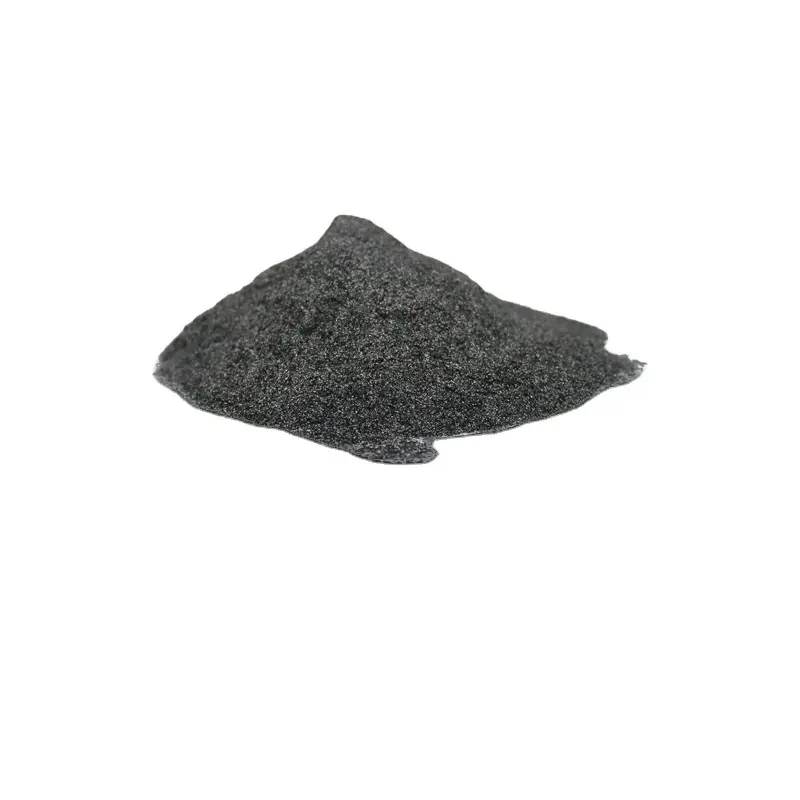
Natural Flake Graphite is used in a wide range of industrial materials because it combines a layered particle structure with useful lubrication, thermal stability, conductivity, and chemical resistance. Depending on the grade and particle size, it may be used in refractory materials, lubricating formulations, carbon products, conductive compounds, and as a raw material for further graphite processing.
However, selecting natural flake graphite only by carbon content can lead to poor processing results. Two products with similar purity may behave very differently if their flake size and particle-size distribution are not the same.
Large flakes, medium flakes, and fine graphite powder each interact differently with binders, other powders, liquids, pressing processes, and high-temperature environments. The correct choice should therefore begin with the final application.
Large Flakes Can Preserve the Layered Structure
One of the main characteristics of natural flake graphite is its plate-like particle shape. When the flakes remain relatively large, more of this natural layered structure is retained.
Larger flakes can be useful in applications where the graphite needs to form overlapping carbon layers or maintain a continuous graphite structure inside the final material.
Depending on the formulation, larger flake graphite may support:
- Better formation of layered carbon structures;
- Lower friction between contact surfaces;
- Reduced direct contact between other raw materials;
- Improved performance in selected refractory systems;
- Further processing into expandable graphite.
However, large flakes may be more difficult to disperse evenly in fine powder mixtures. They may also require different mixing and feeding conditions compared with smaller graphite particles.
This means a larger flake is not automatically a higher-performing product. Its value depends on whether the application can take advantage of the particle shape.
Fine Graphite Is Easier to Mix Into Formulations
When natural flake graphite is ground into finer powder, the particle surface area increases and the material can distribute more easily among other ingredients.
Fine grades may be preferred when graphite needs to be blended into:
- Lubricating formulations;
- Conductive mixtures;
- Refractory powders;
- Coatings;
- Friction materials;
- Carbon-based composite materials.
A finer particle size can help reduce visible separation inside a mixture and improve contact between graphite and surrounding materials.
However, finer powder can also create additional processing challenges. Dust generation may increase during unloading, weighing, and mixing. Very fine particles may also agglomerate when exposed to moisture or unsuitable binders.
The production process should therefore balance dispersion requirements with dust control and material flow.
Refractory Materials Need More Than High Carbon Content
Natural flake graphite is used in refractory products because graphite can tolerate demanding thermal conditions and contribute useful carbon properties. Furuite specifically lists applications such as bricks, magnesia-carbon bricks, and graphite crucible-related refractory products.
In these materials, the graphite must work together with refractory aggregates, binders, antioxidants, and other additives.
Flake size can influence:
- How graphite fills spaces between refractory particles;
- The continuity of the carbon phase;
- Mixing uniformity;
- Pressing behavior;
- Surface structure after forming;
- Final material consistency.
Using excessively coarse graphite may cause uneven distribution, while overly fine graphite may require more binder or change the flow behavior of the mixture.
For this reason, refractory formulations often need a controlled combination of purity and particle size rather than simply selecting the highest-carbon grade available.
Lubrication Depends on the Graphite Surface
Natural graphite is widely associated with lubrication because its layered structure allows adjacent carbon layers to slide relative to one another.
When graphite is used in a solid or dry lubricating formulation, the particles must reach and remain between the moving surfaces. Particle size affects how easily this happens.
Larger flakes may provide broad contact areas, while finer graphite can enter smaller clearances and distribute more evenly through a carrier material.
The suitable grade depends on:
- Clearance between moving parts;
- Surface roughness;
- Whether graphite is used dry or in a formulation;
- Operating temperature;
- Applied pressure;
- Required cleanliness.
Graphite that is too coarse for a narrow contact area may not enter the working surface effectively. Very fine powder, on the other hand, may escape easily or generate unnecessary dust.
Particle-Size Distribution Matters as Much as Average Size
A graphite product may be described using one mesh number or one typical particle size, but industrial behavior depends on the full particle-size distribution.
If a batch contains too much fine powder together with large flakes, the material may separate during transport and storage. The first material removed from a bag may not have exactly the same particle composition as the material near the bottom.
A controlled size distribution helps support:
- More stable automatic feeding;
- More repeatable mixing;
- Consistent pressing behavior;
- Predictable graphite content in the finished product;
- Better batch-to-batch consistency.
For continuous industrial production, this repeatability can be more important than selecting the largest possible flake.
Purity Should Match the Final Process
Natural flake graphite is available in different carbon levels. Higher purity may be important when impurities could affect electrical performance, chemical processes, or sensitive formulations. In other applications, extremely high purity may provide little practical advantage.
Instead of specifying the highest available carbon content automatically, the process should define:
- Required fixed carbon;
- Maximum ash;
- Moisture limit;
- Acceptable impurity level;
- Required particle size;
- Final application.
This avoids using an unnecessarily high grade while ensuring that impurities do not interfere with production.
Natural Flake Graphite Can Also Be a Processing Raw Material
Natural flake graphite is not only used directly in industrial formulations. It can also serve as a starting material for further graphite processing. Furuite lists high-purity flake graphite powder, expandable graphite, and graphite foil among its main graphite products.
For example, suitable natural flakes may be processed into expandable graphite, which can then be further used to produce expanded graphite and flexible graphite materials.
In these cases, the original flake structure becomes especially important because downstream processing depends on how the graphite particles respond to treatment and expansion.
FAQ
1. What is Natural Flake Graphite used for?
Natural Flake Graphite is used in refractory materials, lubricants, conductive compounds, carbon products, friction materials, and as a raw material for expandable graphite and other processed graphite products.
2. Is larger flake graphite always better?
No. Large flakes are useful in applications that benefit from preserved layered structure, while fine graphite may be more suitable for mixing, coatings, lubrication, and powder formulations.
3. What is the difference between flake size and graphite purity?
Flake size describes the physical particle dimensions, while purity usually refers to graphite carbon content and the amount of ash or other impurities. Both can influence processing performance.
4. What should be confirmed before selecting Natural Flake Graphite?
The application should confirm required carbon content, ash, moisture, particle-size range, mixing method, processing conditions, and the performance expected from the finished material.
Post time: Aug-11-2026