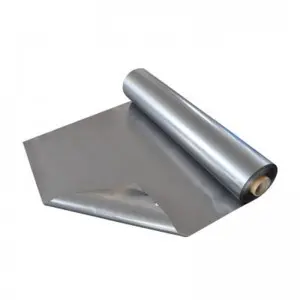
A Flexible Graphite Sheet is often used where heat must be moved away from a concentrated hot spot without adding a bulky metal heat sink. In smartphones, LED lighting, tablet devices, electronic modules, and other compact assemblies, Flexible Graphite Sheet can spread heat across a larger surface before that heat is released to the surrounding structure. Furuite lists flexible graphite sheet for applications including LED lighting, cellular phones, and tablet PCs, with different thicknesses and die-cut processing available for downstream use.
However, two Flexible Graphite Sheet products can look almost identical and still perform differently after installation. The difference is not explained by carbon content alone. Thickness, graphite orientation, contact quality, adhesive layers, cutting design, and the location of the heat source can all change how efficiently heat moves through the final assembly.
Heat Spreading Is Different from Simply “Conducting Heat”
When an electronic component produces heat in a very small area, the immediate problem is often not the total amount of heat but the concentration of heat at one point.
A Flexible Graphite Sheet works well in this situation because its layered graphite structure can move heat laterally across the sheet. Instead of allowing one small area to become extremely hot, the material helps distribute the heat over a larger surface.
That distinction matters:
- Heat conduction describes heat moving through a material.
- Heat spreading describes heat being redistributed away from a local hot spot.
- Heat dissipation describes the final release of that heat into air, a housing, a heat sink, or another structure.
A Flexible Graphite Sheet can therefore improve temperature distribution without acting as a complete cooling system by itself. Its job is often to move heat to an area where another part of the device can remove it more effectively.
The Direction of Heat Flow Changes the Result
Flexible graphite is highly directional because of its layered structure. Heat can move differently along the plane of the sheet than through its thickness.
This is one of the most important reasons a Flexible Graphite Sheet should not be evaluated only by a single thermal-conductivity number.
For example, a sheet placed across a battery module or LED board may spread heat effectively across its surface. But if the design requires heat to move directly through the thickness into another component, the result can be quite different.
The real design question is therefore:
Where does the heat need to go after it enters the Flexible Graphite Sheet?
Before selecting or cutting the material, it is useful to identify:
- The exact hot-spot location;
- The direction in which heat should spread;
- The area available for the graphite sheet;
- The surface that will receive the redistributed heat;
- Whether another heat sink or metal housing is present.
Without this information, even a high-performance graphite sheet may be used inefficiently.
A Thicker Flexible Graphite Sheet Is Not Automatically Better
It is easy to assume that increasing sheet thickness will always improve thermal performance. In real assemblies, the relationship is more complicated.
A thicker Flexible Graphite Sheet contains more graphite material and may improve handling strength or heat-spreading capacity in some designs. However, it also occupies more space and can affect bending, lamination, surface contact, and component clearance.
A thinner sheet may conform more easily to compact electronic assemblies and irregular surfaces, especially where space is limited. Furuite’s product information lists thickness as customizable, which reflects the fact that different assemblies require different sheet structures rather than one universal thickness.
Thickness should therefore be considered together with:
- Available installation space;
- Required heat-spreading distance;
- Bending radius;
- Mechanical support;
- Die-cut shape;
- Lamination structure.
The best thickness is the one that fits the thermal path and mechanical design at the same time.
Poor Surface Contact Can Waste Good Graphite
A Flexible Graphite Sheet cannot spread heat efficiently if heat cannot enter the sheet in the first place.
Small air gaps between a heat source and graphite surface can create thermal resistance because air transfers heat much less effectively than a well-contacted solid interface. Uneven surfaces, wrinkles, dust, poor lamination, or insufficient pressure can all reduce real contact area.
This is why installation quality can sometimes explain a large temperature difference between two otherwise similar assemblies.
When thermal performance falls below expectations, the material itself should not be the only thing checked. It is also worth examining:
- Whether the sheet lies flat against the heat source;
- Whether wrinkles or folds are present;
- Whether adhesive creates an excessively thick interface;
- Whether contamination exists between surfaces;
- Whether the graphite extends far enough beyond the hot spot.
A high-quality Flexible Graphite Sheet cannot compensate for a poorly designed thermal interface.
Die-Cut Shape Can Influence Heat Distribution
Flexible graphite sheet is frequently converted into finished shapes rather than installed as a full rectangular sheet. Furuite notes that finished-product die-cutting can be provided, making geometry an important part of the final application rather than just a manufacturing detail.
Cutouts, narrow sections, screw holes, sharp corners, and interrupted pathways can change the area available for lateral heat movement.
For example, two parts made from the same graphite sheet may perform differently if:
- One has a wide continuous path away from the heat source;
- One has several large cutouts near the hot spot;
- One narrows sharply before reaching the cooling area;
- One covers the entire heat-generating region while another covers only part of it.
This makes the die-cut drawing part of the thermal design.
The most useful question is not simply whether the sheet fits the component, but whether its shape maintains a continuous path for heat to spread.
Adhesives and Laminates Can Become the Hidden Bottleneck
Flexible Graphite Sheet is often combined with PET film, adhesive layers, protective films, metal foil, or other supporting materials. These layers can improve handling, electrical insulation, or assembly convenience, but they can also introduce additional thermal resistance.
A thermal design should therefore evaluate the complete laminated structure rather than graphite alone.
If the graphite itself transfers heat efficiently but the adhesive interface slows heat entry, the final device may not achieve the expected temperature reduction.
Useful checks include:
- Adhesive thickness;
- Coverage area;
- Interface pressure;
- Supporting-film structure;
- Electrical insulation requirements;
- Whether the laminate remains flat after assembly.
This is another reason datasheet thermal conductivity and finished-device temperature cannot always be compared directly.
What Should Be Compared During a Real Thermal Test?
Instead of testing only the Flexible Graphite Sheet as an isolated material, a practical comparison should reproduce the final assembly as closely as possible.
Useful measurements include:
- Maximum hot-spot temperature;
- Temperature difference across the device surface;
- Time required to reach thermal equilibrium;
- Temperature at the far end of the graphite sheet;
- Performance before and after bending or lamination;
- Results using the actual die-cut geometry.
These measurements reveal whether the graphite is simply present in the product or actually improving heat distribution.
For thermal management applications, the value of Flexible Graphite Sheet comes from creating a useful heat path—not from having the highest specification on paper.
FAQ
1. What is Flexible Graphite Sheet used for in electronics?
Flexible Graphite Sheet is commonly used to spread concentrated heat across a larger surface in compact electronic devices, LED systems, mobile devices, and other thermal-management assemblies.
2. Is thicker Flexible Graphite Sheet always better for heat spreading?
No. Thickness affects thermal capacity, flexibility, space use, lamination, and mechanical fit. The correct thickness depends on the design of the thermal path.
3. Why can Flexible Graphite Sheet perform differently after lamination?
Adhesives, films, surface contact, wrinkles, and interface thickness can add thermal resistance and change how efficiently heat enters or leaves the graphite layer.
4. Does die-cutting affect Flexible Graphite Sheet thermal performance?
Yes. Cutouts, narrow sections, holes, and interrupted paths can reduce the continuous area available for lateral heat spreading, so the final geometry should be considered during thermal design.
Post time: Aug-21-2026