In many industrial applications, choosing the right material directly affects equipment stability, maintenance costs, and production efficiency. Although metal plates are widely used because of their strength and easy processing, they may not always perform well under extreme conditions such as high temperature, chemical exposure, and repeated thermal cycling.
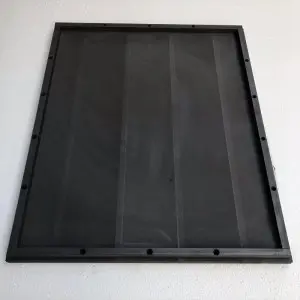
This is why more manufacturers are turning to Graphite Plate for demanding industrial environments. With excellent heat resistance, thermal conductivity, chemical stability, and machining flexibility, graphite plates are used in furnaces, casting equipment, chemical systems, semiconductor production, and customized industrial applications.
However, selecting a graphite plate is not simply about replacing metal with another material. The graphite grade, thickness, machining accuracy, surface finish, and working environment all influence the final performance.
Why Is Graphite Plate Suitable for Difficult Industrial Conditions?
Traditional metal plates work well in many general applications, but their performance may decrease when operating conditions become more challenging.
For example, continuous exposure to high temperatures may cause some metals to deform or lose mechanical strength. In chemical environments, corrosion can shorten service life and increase replacement frequency. During repeated heating and cooling cycles, thermal stress may also affect long-term reliability.
Graphite Plate offers advantages in these situations because it can maintain stable performance under many high-temperature and corrosive conditions. It is especially valuable when manufacturers need a material that can combine heat resistance, conductivity, and dimensional stability.
Key Advantages of Graphite Plate
The popularity of graphite plates comes from the combination of several properties rather than one single feature.
Excellent High-Temperature Performance
Graphite can maintain its structure in high-temperature environments, making it suitable for furnace components, thermal processing tools, and heat-resistant industrial parts.
Compared with many traditional materials, properly selected graphite plates can continue working effectively during repeated heating cycles, helping reduce replacement frequency in demanding applications.
Stable Thermal Conductivity
Graphite has good thermal conductivity, allowing heat to transfer efficiently across the material. This is important in applications where temperature distribution affects production quality.
Stable heat transfer can help improve:
- Heating consistency;
- Process control;
- Thermal efficiency;
- Product quality stability.
Good Chemical Resistance
Many industrial processes involve corrosive gases, chemical liquids, or harsh operating environments. Compared with some metal materials, graphite can provide better resistance to certain chemical conditions.
This makes graphite plates suitable for applications where material stability is important, especially in chemical processing and high-temperature systems.
Where Are Graphite Plates Commonly Used?
Because of their unique performance characteristics, graphite plates are used in many industries with different requirements.
Furnace and Thermal Processing Equipment
Graphite plates are commonly used as support components, heating-related parts, and internal furnace structures. Their ability to withstand high temperatures makes them suitable for repeated thermal cycles.
Casting and Metal Processing
In casting applications, graphite plates can help reduce friction, support smoother material movement, and improve stability during high-temperature operations.
For processes involving molten materials, graphite’s thermal performance and release properties can help improve production efficiency.
Chemical and Electrochemical Applications
Graphite plates are also used in chemical equipment and electrochemical systems because of their chemical resistance and conductivity.
Depending on the application, buyers may require different graphite grades, purity levels, or special treatments.
Customized Industrial Components
Many industrial users require graphite plates with specific dimensions instead of standard sizes.
Customized processing may include:
- Cutting according to drawings;
- CNC machining;
- Hole drilling;
- Groove processing;
- Surface finishing;
- Special thickness requirements.
This allows graphite plates to match specific equipment structures and production needs.
Why Machining Quality Matters for Graphite Plate
Material selection is only one part of graphite plate performance. Processing accuracy can directly affect installation and actual service life.
For industrial applications, important machining factors include:
- Thickness tolerance;
- Flatness;
- Surface finish;
- Hole position accuracy;
- Edge treatment;
- Dimensional consistency.
For example, a graphite plate used in a precision fixture may require much tighter control than a general furnace support plate. Poor machining accuracy can lead to installation difficulties, uneven contact, or unstable operation.
Therefore, buyers should not only focus on graphite material quality but also consider machining capability when selecting a supplier.
How to Choose the Right Graphite Plate?
Choosing the correct Graphite Plate requires understanding the actual working environment rather than only comparing size and price.
Before purchasing, buyers should confirm several key factors:
Working temperature
Different applications require different levels of thermal stability. The graphite grade should match the actual temperature range.
Application environment
The working atmosphere is important, including air, vacuum, protective gas, chemical environment, or direct contact with molten materials.
Thickness and structural requirements
The plate thickness should match the load, support method, installation structure, and operating conditions.
Material properties
Density, purity, strength, conductivity, and thermal performance should be considered according to the application.
Machining requirements
If the graphite plate requires complex shapes, holes, or grooves, machining accuracy should be confirmed before production.
Customized Graphite Plate for Industrial Applications
Standard graphite plates cannot always meet industrial requirements. Many projects need customized solutions based on equipment drawings and production conditions.
A customized Graphite Plate solution may involve:
- Selecting suitable graphite material;
- Designing the correct dimensions;
- Precision CNC machining;
- Surface treatment;
- Quality inspection before delivery.
Providing detailed application information helps ensure that the final graphite plate can perform reliably in real working conditions.
Why Consistent Quality Is Important for Graphite Plate?
For industrial users, graphite plates are often critical components inside a larger production system. If material performance changes between batches, it may affect process stability and final product quality.
Stable graphite plate quality helps maintain:
- Consistent thermal performance;
- Reliable mechanical strength;
- Predictable service life;
- Stable machining results;
- Reduced production interruptions.
For long-term industrial applications, choosing a reliable graphite plate is not only about the initial purchase cost but also about reducing future operating risks.
FAQ
1. What is Graphite Plate used for?
Graphite Plate is widely used in furnace components, casting equipment, chemical systems, semiconductor manufacturing, thermal processing tools, and customized industrial parts that require high-temperature stability and chemical resistance.
2. Why choose Graphite Plate instead of metal plate?
Graphite Plate can provide better performance in some high-temperature and corrosive environments where metal plates may experience deformation, oxidation, or corrosion problems.
3. Can Graphite Plate be customized?
Yes. Graphite plates can be customized through cutting, drilling, CNC machining, groove processing, polishing, and other processes according to drawings and application requirements.
4. What information should buyers provide before ordering Graphite Plate?
Buyers should provide application details, working temperature, environment conditions, required size, thickness, tolerance, surface finish, and machining requirements.
Post time: Jul-22-2026