A rough casting surface is not always caused by the molten metal itself. Problems may begin at the contact area between the metal, sand mould, core, and coating. If the coating does not cover the mould evenly, dries incompletely, or cannot remain stable during pouring, the casting may develop sand adhesion, surface roughness, local penetration, peeling marks, or difficult cleaning after solidification.
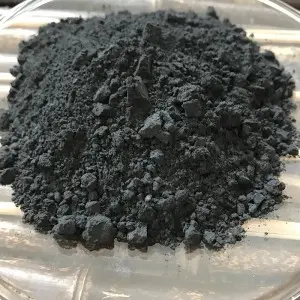
Earthy Graphite, also known as microcrystalline graphite, is used as a carbon-based component in casting coatings. The material is soft, naturally fine in structure, and offers heat resistance, lubricating behavior, thermal conductivity, and chemical stability. It is also used in refractories, carbon products, carburizing materials, electrodes, and other industrial formulations.
In casting coatings, however, the result depends on much more than simply adding graphite. Particle size, purity, binder compatibility, suspension stability, coating thickness, drying conditions, and application method all influence the final surface.
The Coating Creates a Controlled Interface
During pouring, molten metal comes into contact with a mould surface that contains pores, grains, binders, and small irregularities. Without an effective coating layer, metal may enter surface gaps or react with the mould material.
A casting coating forms an intermediate barrier between the mould and the molten metal. Research on foundry coatings shows that this layer can affect metal adhesion, mould protection, heat transfer, and the resulting casting surface.
Earthy Graphite can support this barrier by contributing:
- High-temperature stability;
- Lubricating and release performance;
- Carbon content within the coating;
- Improved coverage of small mould irregularities;
- Reduced direct contact between molten metal and mould material;
- Easier separation after the casting has cooled.
These effects still depend on the complete formulation. Graphite cannot compensate for an unsuitable binder, incorrect coating thickness, poor drying, or a damaged mould surface.
Fine Structure Helps the Coating Cover the Mould
Earthy graphite has a microcrystalline structure and is commonly supplied as a fine carbon material. The website describes it as soft, gray, chemically stable, and low in several potentially harmful impurities, with graphite carbon as its main composition.
In casting coatings, particle size affects how the graphite fills spaces between other refractory particles. A suitable fine grade can help create a more continuous surface and improve distribution across detailed mould areas.
Material that is too coarse may produce:
- A visibly rough coating surface;
- Poor coverage around corners;
- Settling during storage;
- Blockage in spraying equipment;
- Uneven coating thickness.
Material that is excessively fine may create dust, increase liquid demand, form agglomerates, or make viscosity harder to control.
The correct particle-size range should therefore match the coating system and application equipment rather than being selected only according to fineness.
Suspension Stability Affects Every Part of the Mould
A coating may look uniform immediately after mixing but begin to separate during storage or use. Heavy particles can settle, while lighter graphite may collect near the upper part of the container.
Once separation occurs, the coating applied at the beginning of production may have a different composition from the coating used later. One mould may receive too much solid material, while another receives too much liquid and binder.
Stable suspension requires control of:
- Graphite particle distribution;
- Other refractory powders;
- Liquid carrier;
- Binder content;
- Thickening or suspension agents;
- Mixing speed and time;
- Storage period before application.
The coating should also be stirred according to the actual production cycle. Aggressive mixing may introduce excessive air, while insufficient mixing may leave settled solids at the bottom.
Coating Thickness Is Not Simply “More Is Better”
A layer that is too thin may fail to cover the mould completely. Local gaps can expose the sand or core directly to molten metal.
A layer that is too thick may crack, peel, dry unevenly, or alter heat transfer during solidification. Studies have found clear relationships between coating thickness, coating surface condition, and the surface roughness of finished castings.
Thickness is influenced by:
- Solid content;
- Viscosity;
- Dipping or spraying time;
- Number of coating passes;
- Spray distance and angle;
- Mould absorption;
- Drying between layers.
Instead of adding more coating whenever a defect appears, the process should determine whether the problem comes from incomplete coverage, excessive thickness, poor adhesion, or unstable application.
Incomplete Drying Can Create New Defects
Water- or solvent-based coatings must dry sufficiently before molten metal is poured. Residual liquid can rapidly turn into gas under high temperature.
If that gas cannot escape through the mould and coating, it may contribute to pores, blistering, peeling, or local surface defects. A coating that appears dry on the outside may still contain moisture inside thicker areas, corners, or deep cavities.
Drying control should consider:
- Coating thickness;
- Mould temperature;
- Air circulation;
- Ambient humidity;
- Drying time;
- Complex mould geometry;
- Whether multiple layers are applied.
The goal is not simply to dry the coating quickly. Excessive local heating may cause surface cracking while moisture remains underneath.
Different Casting Processes Need Different Formulations
Earthy Graphite is used in casting coatings, but one formulation will not suit every metal, mould, and pouring condition. The official product page also lists uses in refractories, steel and casting materials, electrode paste, carburizing materials, and other carbon-based products, showing that the material can serve different functions depending on the formulation.
Before setting the coating composition, production conditions should confirm:
- Metal or alloy being cast;
- Pouring temperature;
- Sand mould, core, or permanent mould type;
- Coating method;
- Required drying process;
- Expected casting surface;
- Cleaning method after solidification;
- Current defects that need to be controlled.
A coating for iron castings may require different graphite content and refractory support from one used in non-ferrous casting.
FAQ
1. What is Earthy Graphite?
Earthy Graphite is a naturally occurring microcrystalline graphite material. It is soft, gray, carbon-rich, and used in casting coatings, refractories, carbon products, carburizing formulations, electrodes, and other industrial materials.
2. Why is Earthy Graphite used in casting coatings?
It contributes heat resistance, lubricating behavior, carbon content, surface coverage, and separation performance between the mould and molten metal.
3. Can adding more Earthy Graphite improve every coating?
No. Excessive graphite may change viscosity, drying, suspension, adhesion, and coating strength. The content should match the binder, refractory materials, application method, and casting process.
4. What should be confirmed before selecting Earthy Graphite?
Important information includes the casting metal, pouring temperature, coating formula, particle-size requirement, fixed carbon, ash, moisture, application method, drying conditions, and expected surface quality.
Post time: Aug-06-2026