A Graphite Powder Supplier may serve customers from very different industries, but those customers rarely need exactly the same graphite. A refractory producer may focus on flake size and carbon content, while a conductive-coating formulation may care more about particle distribution and electrical performance. A friction-material producer may look closely at impurities and graphite structure, while a metallurgical operation may require a graphite product designed specifically for carbon addition.
This is why industrial graphite supply is rarely about offering one standard powder in several package sizes. The real role of a Graphite Powder Supplier is to connect graphite grade, particle characteristics, carbon level, and product form with the way the material will actually be used.
Furuite’s current product portfolio reflects this range, covering graphite powder as well as natural flake graphite, conductive graphite, graphite products for friction materials, graphite recarburizer, expandable graphite, graphite paper and related graphite materials.
Refractory Producers Need Graphite That Works Inside a Larger Formula
For refractory manufacturers, graphite is only one component of a much larger material system. It may be combined with aggregates, binders, oxides and other carbon-containing raw materials, so the required graphite grade has to fit the formulation rather than dominate it.
A refractory project may therefore begin with questions such as whether the formulation requires larger natural flakes, a finer graphite fraction or a particular carbon level. Particle distribution can influence mixing and packing, while impurity levels may matter when the refractory is exposed to demanding thermal or chemical conditions.
This means a Graphite Powder Supplier working with refractory applications needs to offer more than a single “high-carbon graphite” grade. The useful supply range is one that allows the graphite structure and carbon content to be matched with the existing refractory recipe.
Furuite includes natural flake graphite and graphite powder among its core product directions, with different carbon and particle-size grades represented across its product range.
Conductive Materials Need More Than a High Carbon Number
Conductive coatings and composite materials create a completely different requirement.
Here, graphite particles need to establish enough contact with one another to contribute to an electrical pathway. A high fixed-carbon value is useful, but it cannot by itself guarantee the final resistance of a coating or polymer composite.
Particle form, particle-size distribution, dispersion and the surrounding binder all influence the final result. For this reason, a conductive-material project may require the supplier to provide a graphite grade that performs consistently inside a specific resin or coating system rather than simply reaching a target carbon percentage.
A Graphite Powder Supplier supporting these projects may therefore work from the customer’s finished resistance target, processing method and required particle size. Laboratory evaluation then becomes useful for comparing how different graphite grades behave in the same formulation.
Furuite currently lists Conductive Graphite among its featured graphite products, showing that electrical applications are part of its existing product portfolio.
Friction Materials Need Graphite That Supports a Stable Surface
Brake pads and other friction materials use graphite differently again. In these products, graphite can participate in lubrication and transfer-film formation, while the complete formulation must still maintain the required friction, wear and noise performance.
For this type of application, the graphite supplier is not simply delivering carbon powder. Particle characteristics, ash, sulfur and other impurities can influence how the material behaves within the friction layer.
A project may therefore require several graphite grades to be compared before one is incorporated into regular production. Instead of asking for “the purest graphite available,” the more useful goal is to find a material that fits the complete friction formulation.
Furuite includes a dedicated product direction for graphite used in friction materials, alongside its broader graphite powder range.
Metallurgical Applications May Need a Different Graphite Product Entirely
Not every graphite requirement should be solved with a standard graphite powder.
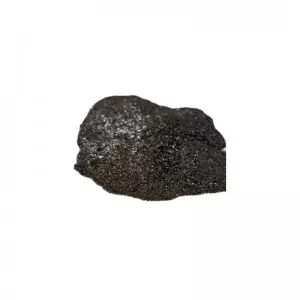
In foundry and steelmaking applications, for example, the objective may be to increase carbon content in molten metal. In that case, a graphite recarburizer is a more application-specific product than a general-purpose fine graphite powder.
The required material may need suitable carbon content, particle size and impurity control so that it can be introduced efficiently into the melting process.
This illustrates an important advantage of working with a supplier that covers several graphite product categories. When the application changes, the solution does not have to be forced into the same powder grade.
Furuite currently lists Graphite Recarburizer as one of its main product categories and also features a product specifically related to the effect of graphite carburizer in steelmaking.
Flame-Retardant Projects Require Expandable Graphite Rather Than Ordinary Powder
A customer developing an intumescent coating, flame-retardant polymer or similar material may need graphite for a completely different reason: it must expand when exposed to heat.
In this situation, ordinary flake graphite and Expandable Graphite are not interchangeable. Expansion onset, expansion volume and particle size become part of the design because the graphite is expected to change structure during thermal exposure.
This is another example of how a Graphite Powder Supplier can support a wider project by understanding the final material rather than simply quoting a standard graphite powder.
Furuite’s featured range includes expandable graphite and a flame-retardant material for powder-coating applications.
Different Projects Can Start from the Same Supplier but End with Different Graphite Grades
The difference between industrial projects becomes clearer when they are compared directly:
| Industrial Project | Graphite Requirement That Often Matters Most |
|---|---|
| Refractory material | Flake size, fixed carbon, mixing compatibility |
| Conductive coating | Particle contact, dispersion, electrical result |
| Friction material | Purity, particle structure, friction-system compatibility |
| Metallurgy | Carbon addition efficiency and suitable particle size |
| Flame-retardant material | Expansion behavior and activation temperature |
| Fine coating or slurry | Fine particle distribution and surface quality |
The point is not that every project requires a completely unique material. Instead, it shows why one standard graphite specification cannot accurately represent every industrial need.
From Sample Grade to Regular Supply
For new formulations, the most practical starting point is often a sample based on the actual application rather than a random standard grade. Once the sample has been tested in the customer’s own process, the successful specification can become the reference for larger-volume supply.
For example, a project can begin with the customer providing:
- Application and final product;
- Required fixed carbon;
- Preferred particle size or mesh;
- Important impurity limits;
- Current graphite specification, if one is already in use;
- Any production issue the new graphite is expected to improve.
This information allows the supplier to narrow the range before testing begins and makes sample evaluation more meaningful.
Furuite as a Graphite Powder Supplier for Multiple Industrial Needs
Furuite positions itself as a producer and processor of graphite and graphite products. Its current website lists graphite powder, graphite paper, graphite recarburizer and graphite mould as core product categories, while its featured products also include earthy graphite, natural flake graphite, conductive graphite, expandable graphite and graphite for friction materials.
For customers working across different graphite applications, this broader product range can make it easier to move from a general material requirement to a more application-specific grade.
If your project involves refractory materials, conductive formulations, friction materials, metallurgy, coatings or another graphite application, send Furuite the target carbon level, particle size, application and current material specification. The team can use those details to compare suitable graphite products, confirm specifications and support sample evaluation before regular supply.
FAQ
1. What products can a Graphite Powder Supplier provide besides standard graphite powder?
Depending on the supplier, the range may include natural flake graphite, conductive graphite, superfine graphite, graphite recarburizer, expandable graphite and other application-specific graphite products.
2. Can one graphite powder be used for refractory, conductive and friction applications?
Sometimes the same general graphite family may be used, but the required carbon level, particle size, impurity control and processing characteristics can differ considerably between applications.
3. Why should an application be provided when requesting graphite powder?
The application helps determine which graphite characteristics matter most. A coating, refractory material and metallurgical process may require different grades even when their target carbon levels appear similar.
4. What information should be sent to a Graphite Powder Supplier for a quotation?
Providing the application, fixed-carbon requirement, particle size or mesh, impurity limits, quantity and current specification helps the supplier identify a more suitable grade and prepare a more relevant quotation.
Post time: Sep-18-2026