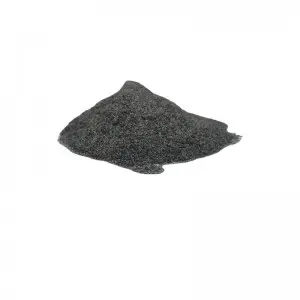
Powder Graphite is a widely used carbon material in industrial production, but choosing the right grade is not as simple as selecting a black powder with a certain particle size. In different industries, Powder Graphite may be required to provide lubrication, conductivity, heat resistance, release performance, corrosion resistance, or structural improvement.
From metal casting and machinery lubrication to coatings, batteries, metallurgy, and high-temperature processing, the working conditions are completely different. A graphite powder that performs well in one application may not provide the expected results in another.
For industrial buyers, the key question is not only “What is Powder Graphite?” but “Which type of Powder Graphite can match my production process?”
Different Applications Require Different Graphite Powder Performance
Many users first focus on price or appearance when purchasing graphite powder. However, graphite powder performance is mainly determined by its internal characteristics, including particle size, carbon content, purity, moisture level, ash content, and structure.
For example, a lubricant manufacturer may focus more on smooth sliding performance and low friction, while a casting company may care more about heat resistance and release performance. A battery-related application may require higher purity and better conductivity.
The same material name can represent different grades designed for different purposes.
Important factors that influence Powder Graphite performance include:
- Particle size distribution;
- Fixed carbon content;
- Purity level;
- Moisture and ash content;
- Lubricating ability;
- Electrical conductivity;
- Thermal stability;
- Dispersion performance.
Selecting the correct combination of properties is more important than choosing the lowest-cost option.
Powder Graphite in Industrial Lubrication
One of the most common uses of Powder Graphite is as a solid lubricant. Unlike liquid oils or greases, graphite powder can continue working in environments where traditional lubricants may lose effectiveness due to high temperature, dust, pressure, or chemical exposure.
The layered structure of graphite allows the material layers to slide against each other easily. This helps reduce direct contact between metal surfaces and lowers friction during operation.
Typical lubrication applications include:
- Industrial machinery components;
- High-temperature equipment;
- Metal forming processes;
- Forging and extrusion operations;
- Bearings and sliding parts;
- Anti-seize compounds.
In these applications, the quality of Powder Graphite can influence equipment wear, maintenance frequency, and production stability.
Why Casting Industries Use Powder Graphite
Casting processes often involve molten metal, high temperatures, and strict requirements for surface quality. Powder Graphite is commonly used in casting because it can provide heat resistance, lubrication, and release performance.
In foundry applications, graphite powder may be used for:
- Mold release materials;
- Casting coatings;
- Lubricating compounds;
- Protective surface treatments;
- Refractory-related products.
A suitable graphite powder helps reduce sticking between metal and mold surfaces, improve demolding efficiency, and protect casting equipment during repeated high-temperature operations.
However, different metals and casting conditions require different graphite grades. Factors such as melting temperature, mold material, and production cycle should be considered before selection.
Powder Graphite for Coatings and Functional Materials
Beyond lubrication and casting, Powder Graphite is also used as a functional additive in coatings, plastics, and composite materials.
In coating systems, graphite powder can provide:
- Electrical conductivity;
- Heat resistance;
- Wear resistance;
- Anti-static performance;
- Surface protection.
When added into polymer or coating systems, graphite particles can help improve certain functional properties while maintaining lightweight characteristics.
For industrial users, dispersion quality is especially important. Poorly dispersed graphite powder may create uneven performance, affecting coating appearance or material consistency.
The Role of Powder Graphite in Metallurgy
The metallurgical industry uses graphite powder because of its carbon content, thermal stability, and high-temperature performance.
Common applications include:
- Carbon additive materials;
- Furnace-related products;
- Refractory materials;
- Metal processing applications;
- High-temperature protective materials.
In these environments, graphite powder must maintain stability under extreme temperatures. Carbon content, impurity control, and oxidation resistance are important factors that influence final performance.
How to Select Suitable Powder Graphite?
Before purchasing Powder Graphite, buyers should understand the actual working environment rather than only providing a product name.
The selection process should consider:
Application Purpose
Different applications require different properties. Lubrication, casting, coating, metallurgy, and electrical uses may need different graphite grades.
Particle Size
Fine graphite powder usually provides better dispersion and surface coverage, while larger particles may offer advantages in certain lubrication or refractory applications.
Purity Requirements
High-purity graphite powder is often required in applications where contamination must be controlled, such as electronic or precision industries.
Carbon Content
Higher fixed carbon content generally means better graphite performance and improved stability in demanding applications.
Processing Environment
Temperature, pressure, chemical exposure, and contact materials all affect which Powder Graphite grade is suitable.
Providing detailed application information helps avoid selecting a material that performs well in testing but fails during actual production.
Why Consistent Powder Graphite Quality Matters
For industrial production, consistency is often more important than a single performance value. If graphite powder quality changes between batches, it may affect product stability, processing efficiency, and final quality.
Reliable Powder Graphite should maintain stable characteristics in:
- Particle distribution;
- Carbon content;
- Moisture control;
- Purity level;
- Processing performance.
For manufacturers using graphite powder in large-scale production, stable supply quality helps reduce adjustments and improves overall production control.
Conclusion
Powder Graphite is a versatile industrial material used in lubrication, casting, coatings, metallurgy, and many high-temperature applications. However, different industries require different graphite characteristics.
The right choice depends on application conditions, particle size, purity, carbon content, thermal requirements, and processing environment. By selecting suitable Powder Graphite instead of simply choosing the cheapest option, industrial users can achieve better performance, longer service life, and more stable production results.
FAQ
1. What is Powder Graphite mainly used for?
Powder Graphite is mainly used for industrial lubrication, casting applications, coatings, metallurgy, refractory materials, and conductive products. Its final use depends on its grade and performance characteristics.
2. Is all Powder Graphite the same?
No. Powder Graphite varies in particle size, purity, carbon content, and performance. Different applications require different graphite grades.
3. Why is Powder Graphite used in casting?
Powder Graphite can provide lubrication, heat resistance, and release performance during casting. It helps reduce sticking problems and improve production efficiency.
4. How do I choose the right Powder Graphite?
The right Powder Graphite should be selected according to application purpose, temperature conditions, particle size, purity requirements, carbon content, and the production environment.
Post time: Jul-08-2026