Graphite Powder for Coatings is widely used in industrial coating systems where standard surface protection is not enough. In many applications, coatings are required to provide additional functions such as lower friction, improved thermal stability, electrical conductivity, or stronger protection under harsh operating conditions.
However, graphite is not simply added to a coating to increase carbon content. The final performance depends on how graphite particles interact with the coating system, including particle size, graphite structure, dispersion quality, and compatibility with binders. A suitable graphite grade should match the purpose of the coating rather than simply focus on one material specification.
Why Graphite Is Used in Industrial Coating Systems
Industrial coatings are developed to solve different surface problems. Some coatings protect components exposed to high temperatures, some reduce friction between moving parts, while others are designed to create conductive or protective layers in demanding environments.
Graphite is valuable in these systems because of its unique layered carbon structure. Unlike ordinary mineral fillers, graphite can provide functional properties that influence how a coating behaves after application. Depending on the formulation, graphite may help improve lubrication performance, heat resistance, electrical pathways, and barrier effects.
The actual result depends on the complete coating system. Graphite works together with resins, solvents, additives, and other fillers, so selecting the right graphite grade is an important part of coating development.
Graphite Powder for Coatings in Lubricating Applications
One of the most common reasons for adding graphite to coatings is to improve surface lubrication.
The layered structure of graphite allows carbon layers to slide against each other more easily. When graphite particles are evenly distributed inside a coating, they can help reduce direct contact between surfaces and support smoother movement, especially in applications where liquid lubricants are difficult to apply or maintain.
This makes graphite-containing coatings useful for mechanical components, high-temperature moving parts, and surfaces that require lower friction. However, lubrication performance is influenced by more than graphite content. Particle size, coating thickness, surface adhesion, and dispersion quality all affect whether the graphite can form an effective lubricating layer.
For this reason, a coating manufacturer usually needs to evaluate how graphite performs inside the actual formulation instead of selecting material only based on carbon percentage.
How Graphite Supports Heat-Resistant Coatings
Some industrial coating systems operate under continuous heat exposure or repeated temperature changes. In these environments, maintaining coating stability becomes a major challenge.
Graphite can contribute to heat-resistant coatings because of its stable carbon structure and thermal characteristics. When properly incorporated into the coating matrix, graphite may help the coating maintain its functional properties under elevated temperatures.
However, thermal performance is not determined by graphite alone. The binder system, curing process, working atmosphere, and graphite characteristics all influence the final result. A graphite grade suitable for one heat-resistant coating may not perform the same way in another formulation.
Therefore, selecting Graphite Powder for Coatings requires considering both the thermal environment and the complete coating design.
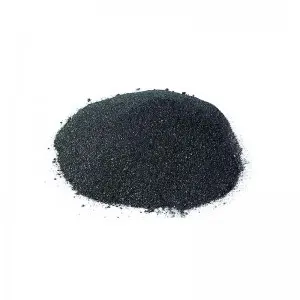
Graphite in Conductive Coating Formulations
Conductive coatings require graphite particles to create effective electrical pathways throughout the coating layer.
Although higher carbon content can be beneficial, conductivity does not depend only on carbon percentage. The connection between graphite particles, particle distribution, loading level, and binder properties all influence electrical performance.
For example, fine graphite powder may provide better dispersion in certain coating systems, while flake graphite may offer advantages where particle contact and structural pathways are important. The best choice depends on the required resistance level, coating thickness, and application method.
Because conductive performance is affected by the entire formulation, graphite selection is often based on practical testing rather than specification comparison alone.
Why Particle Size Matters in Coating Performance
Particle size plays an important role in how graphite behaves during mixing, application, and final coating formation.
Larger flake graphite can maintain more of its original layered structure, which may benefit applications requiring lubrication, thermal stability, or barrier properties. Fine graphite powder, on the other hand, is often easier to disperse and may help create smoother and more uniform coating surfaces.
Neither larger nor finer graphite is universally better. The appropriate particle size depends on the coating objective, application method, surface requirements, and interaction with other materials.
For industrial coating manufacturers, particle size selection should be considered together with fixed carbon, graphite structure, and the expected working environment.
Matching Graphite Characteristics with Different Coating Needs
Different coating applications focus on different graphite properties.
| Coating Application | Important Graphite Characteristics |
|---|---|
| Lubricating coating | Layer structure, friction reduction, dispersion |
| Conductive coating | Particle contact, conductivity, distribution |
| Heat-resistant coating | Thermal stability, carbon content |
| Protective coating | Compatibility, particle uniformity, barrier performance |
This comparison shows why there is no single graphite grade suitable for every coating system. The best material choice depends on what function graphite needs to provide inside the final product.
How to Select the Right Graphite Powder for Coatings
Choosing suitable graphite starts with understanding the coating requirements. Before selecting a graphite grade, manufacturers usually need to consider the coating type, working temperature, application method, required surface performance, and current material specifications.
Important evaluation factors may include:
- Fixed carbon level;
- Particle size;
- Graphite structure;
- Dispersion requirements;
- Operating environment;
- Functional target such as conductivity or lubrication.
A coating project that requires electrical conductivity may prioritize particle contact and distribution, while a protective coating may focus more on stability and compatibility. Matching graphite characteristics with the actual application can help achieve more predictable coating performance.
Furuite Graphite Solutions for Industrial Coatings
Furuite provides graphite products for various industrial applications, including natural flake graphite, conductive graphite, high-carbon graphite, and other graphite materials with different carbon levels and particle specifications.
For coating applications, different formulations may require different combinations of graphite structure, purity, and particle size. Instead of using one standard graphite product for every coating system, selecting a grade based on the actual application can provide more reliable results.
Furuite can support graphite selection according to project requirements, including target carbon content, particle size, coating type, and functional performance needs. Sample evaluation and specification confirmation can help customers identify a suitable graphite solution before regular production.
If you are developing lubricating coatings, conductive coatings, heat-resistant coatings, or other graphite-based coating systems, provide your application details and technical requirements to Furuite for graphite grade comparison and evaluation.
FAQ
1. What is Graphite Powder for Coatings used for?
Graphite powder is used in industrial coatings to improve properties such as lubrication, thermal stability, conductivity, and barrier performance depending on the coating formulation.
2. Is higher carbon graphite always better for coatings?
Not necessarily. Coating performance depends on graphite structure, particle size, dispersion, binder compatibility, and the final application requirements.
3. How does particle size affect graphite coatings?
Particle size influences dispersion, surface quality, conductivity pathways, and lubrication performance, so it should be selected according to the coating purpose.
4. What information is needed to select graphite powder for coatings?
Useful information includes coating type, operating conditions, required performance, fixed carbon level, particle size, and current graphite specifications.
Post time: Sep-22-2026