In many industrial environments, lubrication becomes more difficult when temperature, pressure, or operating conditions exceed the limits of traditional lubricants. Oil-based lubricants may evaporate, degrade, lose viscosity, or become difficult to maintain in certain working environments. In these situations, Graphite Powder for Lubricants provides an alternative approach by using graphite’s natural solid-lubricating properties to reduce friction between contacting surfaces.
Unlike liquid lubricants that rely on maintaining a continuous oil film, graphite works through its layered structure. Under suitable conditions, graphite particles can form a lubricating layer between surfaces, reducing direct metal-to-metal contact and helping components operate more smoothly.
However, graphite powder is not a universal replacement for all lubricants. Its effectiveness depends on the working environment, surface condition, temperature range, and application requirements. Understanding where graphite lubrication performs best is more important than simply adding graphite to a system.
Why Traditional Lubricants Can Struggle in Extreme Conditions
Many mechanical systems rely on oil or grease because these lubricants provide excellent protection under normal operating conditions. They reduce friction, remove heat, and prevent direct contact between moving parts.
However, certain environments create challenges that liquid lubricants cannot easily overcome.In high-temperature applications, oil-based lubricants may gradually lose their original properties. Some oils can oxidize, evaporate, or break down after continuous exposure to heat. In vacuum environments, volatile components may also become unsuitable because evaporation can affect performance.
Heavy-load and slow-speed applications create another problem. When two surfaces experience high pressure but limited movement, maintaining a stable oil film can become difficult. Under these conditions, direct contact between surfaces may increase, leading to wear.
This is where solid lubricants such as graphite become valuable. Instead of depending on a liquid film, graphite provides a dry lubricating layer that can remain effective in environments where traditional lubricants face limitations.
Graphite Powder for Lubricants: How Layered Structure Reduces Friction
The lubrication ability of graphite comes from its unique layered structure.
Graphite consists of carbon atoms arranged in layers. The bonding within each layer is strong, while the interaction between layers is relatively weak. This allows the layers to slide against each other more easily.
When graphite powder is introduced between two contacting surfaces, these layers can help reduce friction by creating a smoother sliding interface. The graphite does not simply make the surface “softer”; instead, it changes how the two surfaces interact during movement.
This mechanism is especially useful when:
- Surfaces experience repeated sliding contact;
- Liquid lubrication is difficult to maintain;
- A dry lubrication method is preferred;
- High temperature limits the use of conventional oils.
The actual performance still depends on how graphite interacts with the surface. A suitable graphite powder should be able to spread effectively, maintain contact with the working area, and form a stable lubricating layer under the operating conditions.
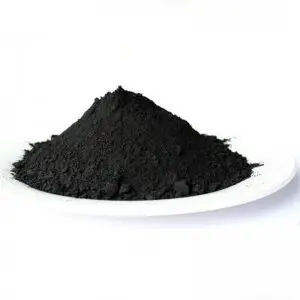
Where Graphite Powder Works Better Than Conventional Lubrication Methods
Different industries use graphite lubrication for different reasons. In most cases, the advantage is not that graphite provides lower friction in every situation, but that it continues to function when traditional lubricants become less practical.
High-Temperature Equipment
High-temperature machinery is one of the most common areas where graphite powder provides value.
Components exposed to continuous heat may experience lubricant degradation, especially when oil-based products cannot maintain stable performance over time. Graphite, as a solid lubricant, can continue providing friction reduction without depending on oil viscosity.
Typical considerations include:
- Working temperature;
- Exposure to oxygen or other gases;
- Contact pressure;
- Frequency of movement.
For these applications, graphite is often selected because it can support lubrication where liquid lubricants have difficulty remaining stable.
Metal Forming and Processing
During metal forming, friction between tools and workpieces can affect surface quality, tool life, and processing efficiency.
Graphite powder can act as a lubricating layer between metal surfaces, helping reduce sticking and excessive friction during forming operations.
However, the result depends on the specific process. A lubricant suitable for one forming operation may not perform the same way in another because pressure, temperature, and surface conditions can vary significantly.
Important factors include:
- Material being processed;
- Required surface finish;
- Contact pressure;
- Application method;
- Lubricant coverage.
Mold Release Applications
In some molding processes, preventing materials from sticking to molds is an important requirement.
Graphite-based lubrication can help create a separation layer between the mold surface and the material being processed. This can improve release performance and reduce surface damage caused by sticking.For mold applications, the goal is usually not only reducing friction but also maintaining a consistent surface condition over repeated cycles.
A suitable graphite lubricant should provide:
- Even surface coverage;
- Good adhesion to the working surface;
- Stable performance during repeated use.
Heavy-Load and Slow-Speed Components
Some mechanical systems operate under high pressure with relatively slow movement. These conditions can challenge traditional lubrication because maintaining a continuous oil film becomes more difficult.
Graphite can provide support in these situations by creating a dry lubricating interface. This makes it useful in applications where surfaces experience strong contact forces but do not require high-speed lubrication performance.
The key is understanding that graphite works best when its solid-lubrication characteristics match the operating environment.
Why Graphite Lubrication Performance Depends on Working Conditions
Although graphite has natural lubricating properties, its performance is influenced by several practical factors.
Temperature
Temperature affects oxidation behavior and the stability of the graphite layer. A suitable operating environment allows graphite to maintain its lubricating effect.
Surface Condition
A very smooth surface and a rough surface may interact with graphite differently. Surface texture influences how graphite particles stay between moving parts.
Pressure and Movement
Graphite performs differently under light sliding contact compared with heavy mechanical loading. The amount and type of movement affect the formation of the lubricating layer.
Particle Characteristics
Particle size and structure influence how graphite spreads and contacts the working surface. Different applications may require different graphite characteristics.
Operating Atmosphere
Humidity, oxygen level, and surrounding materials can influence long-term lubrication performance.
Therefore, choosing Graphite Powder for Lubricants should always consider the complete working environment rather than one material parameter alone.
Choosing Graphite Powder for Different Lubrication Requirements
The following comparison shows why application conditions determine the best graphite lubrication approach:
| Application | Main Advantage of Graphite | Key Consideration |
|---|---|---|
| High-temperature equipment | Maintains lubrication when oils degrade | Temperature and oxidation conditions |
| Metal forming | Reduces sticking and surface friction | Processing pressure and surface finish |
| Mold release | Helps create separation between surfaces | Coating uniformity and repeated cycles |
| Heavy-load components | Provides dry lubrication under pressure | Contact conditions and movement speed |
This comparison highlights an important point: graphite powder is not selected simply because it has good lubrication properties. It is selected because its lubrication mechanism fits a specific operating challenge.
Graphite Powder Is Not a Universal Replacement for Oil-Based Lubricants
While Graphite Powder for Lubricants offers advantages in many special environments, it should not be considered a complete replacement for oil or grease in every application.
Liquid lubricants provide functions that graphite cannot always replace, including cooling, sealing, and removing contaminants from moving systems. In high-speed machinery or applications requiring continuous heat removal, traditional lubrication methods may still be more suitable.
The better approach is to match the lubricant type with the operating conditions.
Graphite is particularly valuable when the main challenge is maintaining lubrication under conditions where conventional lubricants become unstable or difficult to apply.
FAQ
1. Why is graphite powder used as a lubricant?
Graphite powder has a layered structure that allows its layers to slide easily, helping reduce friction and limit direct contact between surfaces.
2. Can graphite powder replace oil-based lubricants?
Not always. Graphite works well in certain high-temperature, dry, heavy-load, or special environments, but oil-based lubricants may still be better for applications requiring cooling or sealing.
3. What factors affect graphite lubrication performance?
Temperature, surface condition, pressure, movement speed, particle characteristics, and operating atmosphere can all influence how effectively graphite reduces friction.
4. Where is Graphite Powder for Lubricants commonly used?
Common applications include high-temperature equipment, metal forming processes, mold release systems, and mechanical components where dry lubrication is preferred.
Post time: Sep-03-2026