Electrical grounding is essential for protecting industrial equipment, controlling electrical interference, and maintaining reliable operation. In many assemblies, grounding performance depends not only on the main conductor but also on the quality of the contact interfaces connecting different components. Flexible Graphite Sheet can provide electrical conductivity and conformability in certain industrial applications, but its suitability depends on the connection design, operating environment, and applicable safety requirements.
Why Electrical Contact Interfaces Matter in Industrial Equipment
Industrial equipment often contains metal enclosures, conductive frames, removable panels, and interconnected components. These parts may need to maintain electrical continuity even when their surfaces are uneven, their dimensions vary slightly, or the assembly experiences vibration and temperature changes.
A connection that appears mechanically secure does not necessarily provide consistent electrical contact. Surface coatings, oxidation, contamination, insufficient contact pressure, and uneven mating surfaces can increase contact resistance. Over time, these conditions may affect electrical continuity or interfere with the intended grounding path. Grounding systems must provide a dependable route for fault current under specified conditions. The connection therefore needs to be evaluated as a complete assembly rather than as an individual conductive material. This includes the contact surfaces, fasteners, clamping force, conductor dimensions, and the mechanical stability of the joint.
Flexible graphite may be considered when a component requires a conductive material that can accommodate certain surface irregularities. However, it should not automatically replace a conventional grounding strap, metal bonding component, or other safety-critical conductor. Its role must be established through engineering evaluation and testing.
How Flexible Graphite Sheet Works at Electrical Interfaces
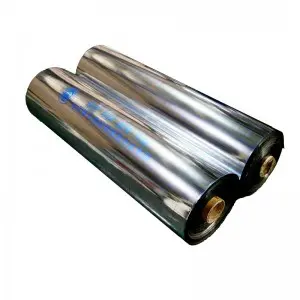
Flexible graphite sheet is generally produced by processing expanded graphite into a sheet form. Its layered structure gives it flexibility and allows it to conform to some surface variations when appropriate pressure is applied. Graphite also has electrical conductivity, which makes it relevant to selected conductive-interface applications.
In an industrial assembly, a sheet may be placed between compatible components to support contact across a defined interface. Its conformability can help accommodate minor surface irregularities, although the actual contact quality depends on the surface finish, compression, sheet properties, and joint design. The electrical behavior of the finished connection cannot be determined from the material’s conductivity alone. Current must pass through the complete interface, including the points where the graphite contacts the adjoining components. Contact resistance, pressure distribution, material thickness, and the stability of the assembly all influence the result.
It is also important to distinguish electrical bonding from electromagnetic interference (EMI) management. A conductive graphite sheet may be considered for certain conductive interfaces or shielding-related designs, but these functions are not interchangeable. A material that helps establish electrical contact or contributes to an EMI control strategy is not automatically suitable for protective grounding.
Where Flexible Graphite Sheet May Be Considered
The potential role of flexible graphite depends on the equipment structure and the purpose of the connection. Its electrical properties and conformability may be relevant in applications where a conductive interface is needed and the material can be securely integrated into the assembly.
- Conductive interfaces between components: Where two compatible parts need electrical contact, a flexible graphite sheet may be assessed as part of the interface design. Its suitability depends on the required current path, contact pressure, and resistance limits.
- Enclosure and panel assemblies: Certain industrial housings contain removable covers or adjoining sections. A conductive sheet may be considered for specific interface requirements, provided it does not compromise mechanical fastening, environmental sealing, or electrical safety.
- EMI-related component interfaces: In selected designs, conductive materials may contribute to electrical continuity or shielding arrangements. The complete structure must be tested because shielding performance depends on the geometry, contact quality, frequency range, and other conductive paths.
What Affects the Reliability of a Graphite-Based Connection?
Contact pressure and surface condition are particularly important. If the sheet does not make consistent contact with the adjoining surfaces, electrical resistance may increase or vary across the interface. Contamination, coatings, oxidation, and uneven clamping can create additional resistance. The joint design should provide stable contact without imposing compression that exceeds the material’s suitable operating range.
Thickness and density also influence how a flexible graphite sheet fits into the assembly. A thicker sheet may accommodate some dimensional variation, but it can also affect the joint’s compression behavior and overall geometry. Density and material structure may influence handling, compressibility, and performance under pressure. These properties should be matched to the intended application instead of selected on flexibility alone. Operating conditions introduce further considerations. Vibration, repeated assembly, thermal cycling, moisture, and exposure to chemicals can change the condition of the interface or the stability of its mechanical fastening. The graphite itself is only one part of the system; adjacent materials and fastening methods may determine whether the connection remains reliable.
Engineers should also consider whether the application requires a predictable low-resistance path during an electrical fault. A material’s general conductivity does not establish its capacity to carry the required fault current safely.
How Should a Flexible Graphite Sheet Connection Be Evaluated?
A practical evaluation should begin with the intended electrical function. If the purpose is protective grounding, the design must meet the applicable safety requirements for the equipment and installation. If the purpose is EMI management or another conductive-interface function, the performance criteria may be different.
The assembled connection should then be assessed under representative operating conditions. Relevant checks may include contact resistance, mechanical stability, compression behavior, temperature exposure, and the effect of vibration or repeated maintenance. Where grounding safety is involved, qualified engineers should determine the required fault-current and protective-continuity tests.
Testing should cover the complete joint, not just a sample of the graphite material. A sheet may exhibit electrical conductivity in isolation while the assembled connection performs poorly because of inadequate contact pressure, unsuitable surface conditions, or unstable fastening. Testing the actual interface helps reveal these issues before the design is adopted. Inspection and maintenance requirements should also be defined. If a connection is opened during servicing, the reassembled joint may not behave exactly like the original installation. The fastening method, surface condition, and replacement procedure should therefore be considered as part of the design.
Finding the Right Flexible Graphite Sheet for Industrial Applications
Selecting a Flexible Graphite Sheet for industrial use requires attention to conductivity, material specifications, and compatibility with the intended component. Thickness, density, and dimensional requirements should be evaluated alongside the operating environment to help ensure that the material suits the application. Qingdao Furuite Graphite Co., Ltd. provides graphite materials for a range of industrial applications, including flexible graphite sheet products. By clarifying the intended use and relevant technical requirements, customers can identify material options that better match their component designs. For protective grounding applications, the complete electrical connection must still be tested against applicable safety standards, because material conductivity alone does not guarantee reliable grounding.
Conclusion
Flexible graphite sheet may be useful in selected industrial conductive interfaces because it combines electrical conductivity with the ability to conform to certain surface variations. Its suitability depends on the connection structure, contact pressure, material specifications, and operating environment. Most importantly, electrical continuity, EMI management, and protective grounding are different requirements that need separate evaluation. A reliable design must be validated as a complete assembly, with appropriate testing and maintenance provisions.
Frequently Asked Questions
1. Can flexible graphite sheet replace a conventional grounding strap?
Not automatically. A conventional grounding strap may be designed and rated for specific fault-current and safety requirements. Flexible graphite sheet should only be used in a protective grounding role if the complete design has been validated for the intended application and complies with relevant standards.
2. Does greater flexibility always improve electrical contact?
No. Flexibility can help a material conform to certain surface irregularities, but electrical contact also depends on surface condition, pressure distribution, material properties, and joint stability. Excessive compression or an unsuitable interface design may reduce reliability rather than improve it.
3. Is electrical conductivity enough to determine whether a graphite sheet is suitable?
No. Material conductivity is only one consideration. The assembled connection must also meet requirements for contact resistance, mechanical stability, operating conditions, and, where applicable, fault-current capacity and protective continuity.
4. How often should a graphite-based electrical interface be inspected?
Inspection frequency depends on the equipment, operating environment, maintenance schedule, and consequences of connection failure. Interfaces exposed to vibration, temperature cycling, moisture, or repeated disassembly may need more frequent checks. The maintenance plan should follow the equipment manufacturer’s requirements and applicable safety standards.
Post time: Oct-22-2026