Graphite powder is a highly versatile material with critical importance across a wide range of industries due to its unique chemical and physical properties. Its applications span from lubricants and metallurgy to energy storage and advanced manufacturing. High-quality graphite powder ensures improved efficiency, stability, and durability in industrial processes. This article explores the key characteristics of high-quality graphite powder, its main industrial applications, and guidelines for selecting the optimal grade for specific needs.
Understanding Graphite Powder
Definition and Properties
Graphite powder is a crystalline form of carbon, naturally occurring or synthetically produced, characterized by its layered structure of graphene sheets. Each layer consists of carbon atoms arranged in a hexagonal lattice, providing the material with unique properties such as high thermal conductivity, electrical conductivity, chemical inertness, and lubricity. Graphite powder is non-metallic, chemically stable, and resistant to high temperatures, making it suitable for demanding industrial environments.
Graphite powder is classified into different grades based on purity, particle size, and intended application. Industrial-grade graphite may range from standard purity (~97%) to ultra-pure levels (≥99.9%), while particle sizes can vary from coarse to submicron, depending on usage.
Key Characteristics of High-Quality Graphite Powder
High-quality graphite powder offers several important features that distinguish it from lower-grade materials:
● High purity levels – Typically above 99%, minimizing impurities that may affect performance in critical applications.
● Fine particle size distribution – Enables improved dispersion and consistent performance in composite materials, lubricants, or battery anodes.
● Consistent quality and particle morphology – Ensures reliable results across batches and reduces process variability.
● Excellent thermal conductivity – Enhances heat dissipation and energy efficiency in high-temperature processes.
● Low ash content – Prevents contamination in metallurgical or chemical applications.
● Good lubricating properties – Reduces friction and wear in machinery and moving components.
Industrial Applications of High-Quality Graphite Powder
1. Lubricants
Graphite powder is widely used as a solid lubricant where traditional liquid lubricants may fail. Its low friction coefficient reduces wear and tear on surfaces, extending component life and improving operational efficiency. Graphite powder performs exceptionally well in high-temperature or vacuum environments, where oils or greases may degrade.
Typical applications include:
● Automotive components such as gears, brake systems, and clutch assemblies.
● Precision machinery, including machine tools and industrial equipment.
● Bearings, seals, and sliding mechanisms in high-temperature furnaces or presses.
Graphite powder can be blended with oils and greases or applied directly as a dry lubricant to surfaces exposed to extreme conditions.
2. Energy Storage
Graphite powder plays a vital role in energy storage, particularly in lithium-ion battery production. It is commonly used as the main component of the anode material. High-quality graphite powder contributes to:
● Enhanced electrical conductivity for improved charge and discharge efficiency.
● Stable cycling performance, reducing capacity loss over time.
● Increased energy density and longer battery life, which is critical for consumer electronics, electric vehicles, and renewable energy storage systems.
Ultra-pure graphite powders with submicron particle sizes are preferred for high-performance batteries due to better uniformity and minimal impurity interference.
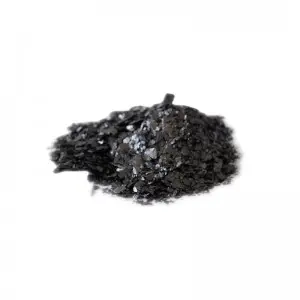
3. Metallurgy and Refractory Materials
In metallurgy, graphite powder is widely used as a raw material for the production of crucibles, molds, electrodes, and other refractory materials. Its high melting point, thermal stability, and chemical inertness make it ideal for applications involving molten metals or corrosive environments.
Graphite powder is commonly applied in:
● Steelmaking and iron foundries, where it contributes to carbon control and thermal management.
● Non-ferrous metal production, such as aluminum or copper casting.
● Refractory material manufacturing, providing durability and thermal shock resistance for molds and crucibles.
The material’s stability ensures that metallurgical processes remain efficient while minimizing contamination or defects in the final products.
4. Other Industrial Applications
Beyond lubrication, energy storage, and metallurgy, high-quality graphite powder finds applications in a variety of other industrial sectors, including:
● Conductive coatings – Graphite powder is used in paints, inks, and conductive polymers for anti-static and electromagnetic shielding purposes.
● Seals and gaskets – Its chemical inertness and thermal stability make it suitable for high-performance sealing solutions.
● Composites and friction materials – Graphite powder improves wear resistance, thermal conductivity, and mechanical performance in engineered composites and brake pads.
Sample Data Comparison of Graphite Powder Grades
| Grade | Purity (%) | Particle Size (µm) | Thermal Conductivity (W/m·K) |
|---|---|---|---|
| Standard | 97 | 10-100 | 150 |
| High-grade | 99 | 5-50 | 200 |
| Ultra-pure | 99.9 | 1-10 | 250 |
This data illustrates how higher-purity and finer particle size graphite powders provide superior thermal and electrical performance, critical for advanced industrial applications.
Frequently Asked Questions
Q: What are the advantages of high-quality graphite powder in industrial use?
A: High-purity graphite powder provides superior thermal conductivity, electrical performance, lubricity, and process stability, enhancing the efficiency and durability of machinery, energy storage systems, and metallurgical operations.
Q: How does graphite powder differ from graphite flakes?
A: Graphite powder consists of finely ground particles, while graphite flakes are larger and plate-like. Powder is preferred for applications requiring uniform dispersion, precise anode formation, or high surface area contact.
Q: Can graphite powder be used in high-temperature environments?
A: Yes, graphite powder is thermally stable, with low thermal expansion, making it ideal for high-temperature operations like furnaces, molds, and high-performance lubrication systems.
Conclusion
High-quality graphite powder is a versatile and indispensable material across a wide range of industrial sectors. Its properties—thermal conductivity, lubrication, chemical stability, and electrical conductivity—make it critical in lubrication, energy storage, metallurgy, composites, and many other applications.
When selecting graphite powder, it is essential to consider purity, particle size, thermal properties, and application requirements. Choosing the right grade ensures optimal performance, improved process efficiency, and extended durability of industrial components.
Product Selection Recommendations
To maximize the benefits of graphite powder in industrial applications:
● Opt for purity levels above 99% for critical performance.
● Choose particle size distribution appropriate to the application.
● Consider thermal conductivity and lubricating properties for high-temperature or energy applications.
● Ensure consistent quality across batches to reduce variability and maintain performance.
By selecting high-quality graphite powder tailored to specific industrial needs, manufacturers can achieve better efficiency, durability, and performance in their operations, making it a vital component of modern industrial processes.
Post time: Jan-06-2026