Graphite powder is an important raw material in powder metallurgy, particularly for manufacturing iron-based components. It provides an additional carbon source that influences the microstructure, hardness, strength, and wear behavior of finished parts. However, achieving the desired properties requires more than adding a specific amount of graphite. Particle characteristics, blending uniformity, compaction, and sintering conditions all affect the final result.
For manufacturers producing powder metallurgy components, controlling carbon distribution is essential. Uneven distribution can cause differences between individual parts or even within the same component. Understanding how graphite powder behaves throughout production helps improve material consistency and reduce avoidable processing problems.
The Role of Graphite Powder in Powder Metallurgy
Powder metallurgy is a manufacturing process that converts metal powders into solid components through compaction and sintering. During production, metal powders are blended, pressed into a required shape, and heated under controlled conditions to develop the desired structure and properties.
In iron-based powder metallurgy, graphite powder is commonly used as a carbon additive. During sintering, carbon can diffuse into iron particles and influence the resulting microstructure. This makes graphite an important formulation component rather than simply an additional filler.
Carbon content affects several properties of sintered components, including hardness, strength, and wear resistance. The relationship is not always straightforward, because the final performance also depends on the base metal composition, compacted density, sintering atmosphere, temperature, and cooling conditions.
Different components require different material characteristics. A part exposed to repeated mechanical loads may need a different carbon level from one used in a less demanding structural application. Therefore, graphite addition should be determined according to the intended function and verified through material testing rather than applying one fixed proportion to every formulation.
Why Graphite Distribution Matters in Sintered Components
The total carbon content of a powder mixture does not automatically guarantee uniform distribution. If graphite accumulates in certain areas, different regions of a compacted component may receive different amounts of carbon during sintering.
This can lead to local variations in microstructure and mechanical properties. Some areas may become harder than expected, while others may not achieve the required performance. For components that require consistent strength, wear resistance, or dimensional reliability, these differences can affect product quality.
Several factors influence how evenly graphite spreads through a metal powder mixture:
- Particle size compatibility: Significant differences between graphite and base metal particle sizes may encourage separation during handling. Suitable particle characteristics help maintain a more stable blend.
- Mixing sequence: Adding graphite too quickly or at an unsuitable stage can create concentrated areas. Controlled feeding helps distribute carbon throughout the batch.
- Mixing conditions: Insufficient mixing may leave uneven concentrations, while excessive mechanical action can affect powder flow and handling. The mixing process should match the formulation and equipment.
- Material handling: Vibration, transportation, and repeated transfers may cause ingredients with different physical characteristics to separate. Consistent handling procedures help reduce this risk.
These considerations make powder preparation an important part of production. Once the mixture enters the compaction stage, correcting uneven graphite distribution becomes considerably more difficult.
Selecting Graphite Powder for Different Applications
Not every type of graphite powder is equally suitable for powder metallurgy. Material selection should consider the finished component’s requirements as well as the characteristics of the production process.
Particle size is one of the first factors to evaluate. It influences how graphite interacts with metal powders and how easily the ingredients can be blended. A particle size suitable for one formulation may not perform equally well in another, particularly when the base metal has a different particle-size distribution.
Purity is also important. Unwanted impurities may introduce variations into the formulation or affect the consistency of the finished material. Manufacturers should review relevant material specifications based on the component’s intended performance and quality requirements.
Physical characteristics influence storage and processing as well. Moisture condition, powder flow, and batch consistency can affect feeding accuracy and blending behavior. If graphite does not flow consistently, maintaining a stable addition rate may become more difficult.
Rather than selecting a material based on one specification alone, manufacturers should evaluate how its characteristics interact with the entire production process. Small-scale trials can help determine whether the selected graphite provides suitable distribution and supports the required component properties.
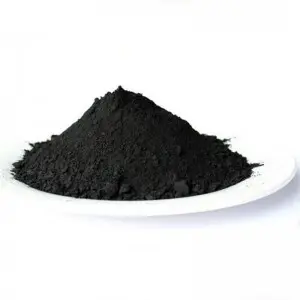
Controlling Graphite During Mixing and Sintering
Mixing and sintering are closely connected, but they serve different purposes. Mixing distributes graphite throughout the metal powder, while sintering provides the thermal conditions needed for carbon diffusion and the development of the final structure.
During mixing, the objective is to achieve a consistent blend without causing unnecessary separation. The appropriate method depends on batch size, equipment design, powder characteristics, and production requirements. A longer mixing cycle does not automatically produce a better result, particularly if the ingredients begin to separate during discharge or transportation.
Sintering introduces another group of variables. Temperature, holding time, atmosphere, and cooling conditions influence how carbon interacts with the iron-based material. Even a well-prepared powder mixture may produce inconsistent results if thermal conditions fluctuate between production batches.
Manufacturers should therefore evaluate both stages together. Useful process checks include:
- Comparing carbon content across representative material samples and production batches.
- Checking whether the mixture remains consistent after transportation and transfer.
- Monitoring compaction density and dimensional changes after sintering.
- Testing hardness and other mechanical properties against the component’s requirements.
These checks help identify whether variations originate from raw materials, powder preparation, compaction, or thermal processing. This distinction matters because changing the graphite addition rate will not necessarily solve a problem caused by unstable sintering conditions.
Common Processing Challenges and Their Solutions
One common issue is inconsistent carbon content. It may result from inaccurate feeding, uneven blending, or separation during material handling. Another problem is variation in mechanical properties between finished components. Although graphite distribution can contribute to this issue, compaction density and sintering conditions must also be considered.
Powder flow can create additional difficulties. If graphite and metal powders behave differently during feeding, the mixture may enter the pressing equipment unevenly. This can affect mold filling and contribute to variations in compacted density.
The most effective response is to examine the complete production process rather than immediately increasing graphite content or replacing the existing material. Reviewing incoming material quality, blending procedures, feeding conditions, and finished-part performance provides a clearer understanding of the actual problem.
Consistent production records are also useful. Recording material batches, mixing settings, processing conditions, and inspection results helps manufacturers identify recurring variations and improve process control over time.
Choosing a Graphite Powder Manufacturer In China
For powder metallurgy applications, material consistency is important because differences in raw material characteristics can influence blending and subsequent processing. When evaluating a Graphite Powder Manufacturer In China, manufacturers should consider product specifications, batch consistency, available material information, and the ability to discuss specific application requirements.
Qingdao Furuite Graphite Co., Ltd. provides graphite products, including graphite powder and flake graphite, for different industrial applications. When assessing graphite for powder metallurgy, discussing the intended component, required material characteristics, and processing conditions can help establish a more suitable basis for product selection and testing.
Conclusion
Graphite powder contributes to carbon control and material performance in iron-based powder metallurgy. Its effectiveness depends on particle characteristics, blending uniformity, material handling, and sintering conditions. By evaluating these factors together, manufacturers can reduce material variations and improve the consistency of sintered components. Selecting suitable graphite and maintaining stable production procedures are both important for achieving reliable results.
FAQs
1. Can graphite powder be used in non-iron-based powder metallurgy?
Its suitability depends on the base material and the purpose of the formulation. Graphite is widely used in iron-based systems, but its role in other metal powder systems must be evaluated according to material compatibility and performance requirements.
2. Does the graphite addition rate remain the same for every component?
No. The required amount depends on the base metal composition, target carbon content, component function, and processing conditions. Formulation trials are needed to establish an appropriate addition level.
3. Why should carbon content be checked after sintering?
The initial powder mixture does not always reflect the final carbon condition of a component. Testing after sintering helps verify whether the finished material meets its intended composition and performance requirements.
4. Can changes in mixing equipment affect graphite distribution?
Yes. Mixer design, loading conditions, material circulation, and discharge methods can all influence blending uniformity. Any equipment change should be evaluated through production trials before being adopted.
Post time: Nov-04-2026