Graphite powder for dry lubrication is widely used in industrial processes where friction reduction, wear control, and temperature resistance are important. Unlike conventional liquid lubricants, graphite powder can provide solid lubrication without relying on a continuous oil film. This makes it useful in selected metal-forming operations, high-temperature applications, and mechanical systems where oils or greases may be unsuitable.
However, effective lubrication depends on more than the material itself. Particle size, humidity, contact pressure, operating temperature, and surface conditions all influence graphite powder performance. Understanding these factors helps users select the right grade and determine whether dry lubrication is suitable for a particular application.
How Graphite Powder Works as a Dry Lubricant
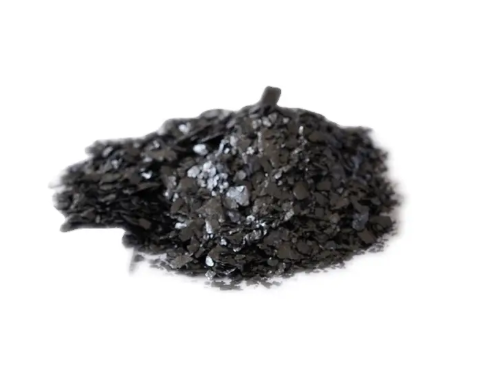
Graphite has a layered crystal structure consisting of carbon atoms arranged in sheets. Strong bonds hold the atoms within each sheet, while weaker forces act between adjacent layers. This structure allows the layers to slide over one another, giving graphite its characteristic lubricating properties.
When graphite powder enters the contact area between two surfaces, its particles can form a lubricating layer that reduces direct surface contact. Under suitable conditions, this layer helps lower friction and limit wear. Unlike oil-based lubricants, graphite powder does not require a liquid carrier to provide its basic solid-lubrication function. It can be applied directly in certain processes or incorporated into coatings, pastes, and specialized lubricant formulations.
Its effectiveness depends on whether the particles reach the contact area and remain there during operation. Surface roughness, applied load, particle distribution, and environmental conditions all affect the stability of the lubricating layer.
Key Benefits of Graphite Powder for Dry Lubrication
Reduced Friction and Wear
Graphite powder can reduce friction between contacting surfaces because its layered particles shear relatively easily. This property makes it useful in metal forming, selected sliding components, and industrial applications involving repeated surface contact. Lower friction may also reduce heat generation and help maintain consistent operation.
The actual reduction in friction and wear depends on the materials involved, contact pressure, movement speed, and surface finish. For applications with strict performance requirements, testing under representative operating conditions is necessary to determine whether a particular graphite powder grade provides sufficient lubrication.
Performance at Elevated Temperatures
Graphite powder can be used in certain high-temperature applications where conventional oils and greases may degrade, evaporate, or lose their lubricating properties. It is therefore relevant to selected forging operations, metalworking processes, and industrial assemblies.
Nevertheless, graphite is not immune to oxidation. In oxygen-containing environments, elevated temperatures can accelerate oxidation and reduce service life. Temperature limits should therefore be evaluated alongside exposure time and surrounding atmosphere rather than relying on graphite’s thermal stability alone.
Flexible Application Methods
Graphite powder can be used directly in suitable processes or incorporated into anti-seize compounds, lubricating coatings, and other formulations. The appropriate method depends on how the lubricant must reach the contact surface and how long it needs to remain there.
Loose powder may be sufficient for some applications, while coatings or formulated products can provide better control over coverage and retention. The choice should also account for contamination risks, application consistency, and maintenance requirements.
Common Industrial Applications
Metal Forming and Forging
Graphite-based lubricants are used in selected forging and metal-forming operations to reduce friction between the workpiece and tooling. Suitable formulations can help limit sticking and support material movement during forming.
The required graphite grade depends on the processed metal, tooling material, forming temperature, and application method. Particle size and formulation consistency are important because uneven coverage may produce inconsistent lubrication.
Anti-Seize Compounds
Graphite is commonly incorporated into anti-seize products designed to reduce sticking and galling between metal components. These formulations may be used in selected threaded connections, industrial fittings, and assemblies exposed to elevated temperatures.
Compatibility remains essential. Graphite-based anti-seize products are not automatically suitable for every fastener, precision assembly, or material combination. Product specifications and application requirements should guide selection.
Sliding Components and Lubricating Coatings
In some mechanical systems, graphite powder provides lubrication where a solid lubricant is preferred. It can also be incorporated into coatings or composite materials designed for sliding contact.
Performance depends on contact pressure, sliding speed, surface roughness, humidity, and the ability of the lubricant to remain at the interface. For applications requiring predictable friction or extended service intervals, representative testing can help determine whether graphite powder provides adequate durability.
Factors That Affect Graphite Powder Performance
Selecting graphite powder for dry lubrication requires evaluating both material specifications and operating conditions.
- Particle size and distribution: Particle size affects dispersion, surface coverage, flow behavior, and lubricating-layer formation. Fine particles may improve coverage in some applications, but the smallest available size is not always the best choice. The appropriate range depends on contact geometry, the application method, and the required surface finish.
- Humidity and temperature: Environmental moisture can influence graphite’s friction behavior, and very dry conditions may increase friction in some applications. Temperature is equally important because oxidation in hot, oxygen-rich environments may limit performance. Both humidity and operating atmosphere should be considered when selecting a suitable grade.
- Contact pressure and surface condition: Excessive loading, unsuitable surface roughness, or poor material compatibility may reduce lubrication effectiveness. The powder must be appropriate for the contact conditions and the materials being lubricated, especially when consistent friction and wear control are required.
- Purity and consistency: Carbon content, ash level, moisture, and batch consistency may affect processing behavior and the performance of the final formulation. These specifications are particularly important in controlled industrial processes where variations in raw materials can influence product quality.
Limitations of Graphite Powder for Dry Lubrication
Although graphite powder offers useful lubrication properties, it is not suitable for every operating environment. Very dry conditions may reduce its effectiveness in certain applications, while oxidation can limit its use in hot, oxygen-rich environments.
Loose graphite particles may also migrate away from the contact area. Where long-lasting lubrication, precise application, or strict contamination control is required, a bonded coating or formulated lubricant may be more appropriate than directly applied powder.
Dust management is another important consideration. Fine graphite powder can become airborne during transfer, mixing, and application. Suitable ventilation, dust extraction, housekeeping, and protective measures help control exposure. Fine carbonaceous dust may also present a combustible-dust hazard under certain conditions, so handling should follow the applicable safety data sheet and workplace requirements.
How to Choose the Right Graphite Powder
The most suitable graphite powder should match the intended application rather than being selected solely by price or particle fineness. Start by identifying the lubrication task, whether it involves forging, anti-seize protection, sliding contact, or a specialized coating. Then establish the working temperature, humidity, contact pressure, movement speed, and surrounding atmosphere.
Review the material specifications, including particle size, particle distribution, purity, carbon content, and moisture level. If the powder will be blended with binders, oils, greases, or other additives, confirm that the ingredients are compatible. It is also important to determine whether loose powder, a paste, or a coating will provide sufficient surface coverage and retention.
Before full-scale implementation, evaluate the selected grade under representative operating conditions. Assess friction, wear, coverage, and durability to determine whether the material meets the requirements of the process.
Selecting Graphite Powder for Your Application
Choosing graphite powder with the appropriate particle characteristics, purity, and thermal properties can help improve lubrication consistency and support reliable industrial operation. The most effective selection process begins with a clear understanding of the contact materials, working environment, and required service life.
Comparing technical specifications and evaluating samples under actual operating conditions can help determine whether a particular graphite powder grade meets your process requirements. This approach also helps identify potential limitations before the material is introduced into full-scale production.
Conclusion
Graphite powder is a useful solid lubricant for selected industrial applications because its layered structure helps reduce friction without requiring a conventional liquid lubricant film. It is used in metal forming, anti-seize compounds, sliding components, and specialized lubricating coatings.
Its performance depends on particle size, humidity, temperature, contact pressure, surface condition, and material compatibility. By evaluating these factors and testing the selected grade under representative conditions, users can make better-informed decisions and improve lubrication reliability.
Frequently Asked Questions
1. Is graphite powder suitable for dry lubrication?
Yes. Graphite powder can reduce friction between contacting surfaces without requiring a conventional liquid lubricant film. Its effectiveness depends on temperature, humidity, load, and surface conditions.
2. Can graphite powder be used at high temperatures?
Yes, in suitable applications. However, oxidation in oxygen-containing environments can limit its service life, so temperature and atmospheric conditions must be considered together.
3. Does particle size affect graphite powder lubrication?
Yes. Particle size influences dispersion, surface coverage, and lubricating-layer formation. The best size range depends on the application and contact geometry.
4. How should graphite powder be selected for industrial lubrication?
Consider the application, particle specifications, purity, temperature, humidity, contact pressure, and material compatibility. Testing under representative operating conditions is recommended before full-scale use.
Post time: Oct-09-2026