A flange joint may appear tightly assembled, but its two metal surfaces are never completely smooth. Small scratches, machining marks, thermal deformation, and uneven bolt pressure can create microscopic leakage paths. When the equipment handles hot gases, steam, oils, or chemical media, these gaps may gradually lead to pressure loss, contamination, or repeated maintenance.
Graphite Paper is used to create flexible sealing layers that adapt to these surface irregularities. Unlike rigid graphite components, it can be compressed between mating surfaces and formed into gaskets, rings, strips, or laminated sealing products.
Its role is not to increase the strength of the flange. Instead, it fills surface gaps, maintains contact under temperature changes, and helps the joint remain sealed during operation.
A Flat Metal Surface Is Not Truly Flat
Even carefully machined flange surfaces contain small grooves and uneven areas. A hard gasket may contact only the highest points, leaving narrow channels between the two surfaces.
Graphite paper can deform under controlled compression and follow the shape of the sealing surface. This allows it to contact more of the flange area and reduce potential leakage paths.
This characteristic is useful in:
- Pipe flange connections;
- Pump and valve assemblies;
- Heat exchangers;
- Compressors;
- Furnace doors;
- Exhaust systems;
- Chemical processing equipment.
The final sealing result still depends on flange condition, bolt load, gasket dimensions, and operating pressure. Graphite paper cannot compensate for a seriously warped, corroded, or damaged flange.
Temperature Cycling Can Loosen Ordinary Seals
Industrial equipment rarely remains at one temperature. During startup, operation, shutdown, and maintenance, metal parts repeatedly expand and contract.
If a sealing material becomes hard, brittle, or permanently deformed, it may stop following the movement of the flange. The joint can then begin to leak even though the bolts have not visibly moved.
Graphite Paper is valued for its ability to remain compressible through repeated temperature changes. It can continue adjusting to small movements between connected parts and help maintain sealing pressure.
This makes it suitable for equipment that experiences:
- Frequent heating and cooling;
- Long high-temperature operating cycles;
- Temperature differences across the flange;
- Repeated shutdowns and restarts;
- Limited access for frequent gasket replacement.
However, exposure to air at high temperatures can affect graphite through oxidation. Actual temperature limits must therefore be evaluated together with the working atmosphere.
Thin Material Can Solve Limited-Space Problems
Some sealing positions do not have enough room for thick gaskets. Increasing gasket thickness may change equipment alignment, reduce bolt engagement, or affect the position of connected components.
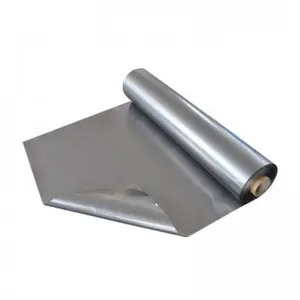
Graphite paper can be produced in relatively thin and flexible forms, making it useful where the available sealing space is limited. It may be used as a standalone layer or combined with metal, fiber, or other supporting materials.
Common product forms include:
- Flexible graphite sheets;
- Die-cut flange gaskets;
- Graphite sealing rings;
- Narrow sealing strips;
- Metal-reinforced graphite sheets;
- Laminated gasket materials.
The correct form depends on pressure, flange width, installation method, and whether the gasket requires additional mechanical support.
Chemical Compatibility Still Requires Verification
Graphite is stable in contact with many industrial fluids, which is one reason Graphite Paper is used in chemical, petrochemical, energy, and process equipment.
However, no sealing material should be selected only from a general statement such as “chemical resistant.” The exact medium, concentration, temperature, pressure, and exposure time must be considered together.
Before selecting graphite paper, confirm whether the equipment handles:
- Steam or hot water;
- Oils and fuels;
- Acids or alkalis;
- Process gases;
- Solvents;
- Oxidizing media;
- Mixed or changing chemicals.
Certain strongly oxidizing environments may require another sealing material or a specially designed graphite-based gasket.
Reinforcement Changes Mechanical Performance
Pure flexible graphite paper provides good conformability, but it has limited mechanical strength. Large flange gaskets, high-pressure joints, or parts exposed to handling stress may require reinforcement.
Metal foil, perforated metal, or wire mesh can be added to improve dimensional stability and make the gasket easier to install. The reinforcement also helps reduce tearing during cutting, transport, and assembly.
A reinforced graphite sheet may be more suitable when:
- The gasket has a large diameter;
- Bolt holes create narrow sections;
- Higher pressure must be controlled;
- The gasket is frequently handled before installation;
- The joint experiences vibration;
- Blowout resistance is important.
The reinforcement material must also be compatible with the operating medium and temperature.
FAQ
1. What is Graphite Paper mainly used for?
Graphite Paper is commonly used for high-temperature gaskets, flange sealing, valve and pump seals, furnace components, thermal barriers, and laminated industrial sealing materials.
2. Can Graphite Paper be used directly as a gasket?
Yes, in suitable low- or medium-stress applications. High-pressure, large-size, or vibration-sensitive joints may require reinforced graphite sheets or composite gasket structures.
3. Is thicker Graphite Paper always better for sealing?
No. Thickness should match flange condition, available installation space, pressure, and required compression. Excessive thickness may reduce stability or affect equipment alignment.
4. What information should be confirmed before selecting Graphite Paper?
The required information includes operating temperature, pressure, sealing medium, flange dimensions, surface condition, gasket thickness, reinforcement needs, and installation method.
Post time: Jul-30-2026