In metal casting, mold coatings must provide reliable surface protection without preventing gases from escaping. A coating that is too thin may leave parts of the mold exposed to molten metal, while an excessively thick layer can interfere with gas movement and create additional casting problems. Achieving the right balance is an important part of coating formulation and application.
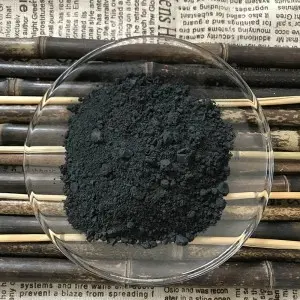
Earthy Graphite Used In Casting Coatings can contribute to the formation of a protective layer on sand molds and cores. However, its effectiveness depends on more than graphite content. Particle characteristics, formulation design, coating thickness, and application conditions all influence the final result. Understanding these relationships helps foundries improve coating consistency while maintaining suitable permeability.
Why Coverage and Permeability Matter in Casting
Casting coatings create a barrier between molten metal and the mold surface. This barrier helps reduce direct contact with molding sand, limits metal penetration, and supports better casting surface quality. Uniform coverage is particularly important around corners, joints, narrow sections, and other areas where application can be difficult.
At the same time, gases produced during pouring must escape through the mold system. Moisture, binders, and other materials can generate gases when exposed to high temperatures. If the coating becomes too dense or excessively thick, gas movement may be restricted, increasing the risk of defects such as blows and pinholes.
This means coating performance cannot be judged by coverage alone. A suitable formulation needs to provide enough surface protection while preserving the gas-release characteristics required by the molding system. Earthy Graphite Used In Casting Coatings should therefore be evaluated according to both requirements.
How Graphite Particle Characteristics Affect Coating Performance
Particle characteristics influence how graphite behaves during mixing, application, and drying. Particle size distribution, surface properties, and material consistency can affect coating flow, suspension stability, and the structure of the finished layer.
If coarse particles are unsuitable for the intended formulation, the coating may become difficult to distribute evenly over detailed mold surfaces. This can result in irregular coverage or local weaknesses. Very fine particles may improve certain aspects of surface distribution, but they can also change viscosity, settling behavior, and the arrangement of solids after drying.
For this reason, the finest graphite is not automatically the best choice. The objective is to select a particle distribution that supports stable mixing and practical application while producing a coating structure appropriate for the casting process.
The characteristics of Earthy Graphite Used In Casting Coatings must also be considered alongside binders, carriers, and other additives. These ingredients work together to determine adhesion, flow, drying behavior, and the final coating structure. Their compatibility is essential for maintaining consistent performance during production.
Problems Caused by Poor Coating Thickness Control
Coating thickness directly affects the balance between protection and permeability. Insufficient application may leave exposed areas, while excessive application can increase drying time and change the resistance to gas flow.
- Exposed mold areas can increase direct contact between molten metal and molding sand.
- Uneven coating distribution may cause differences in surface quality across the casting.
- Local weaknesses can increase the possibility of metal penetration and sand-related defects.
Excessive coating thickness creates a different set of concerns. Thick layers may dry unevenly, retain moisture, or form an unsuitable structure. They can also increase material consumption without delivering a proportional improvement in casting quality.
Formulation Design: Maintaining a Suitable Coating Structure
The performance of graphite-based casting coatings depends on the interaction between solid materials and the liquid system. Increasing solid content may improve coverage, but it can also raise viscosity and make application more difficult. Formulation adjustments should therefore address actual production requirements instead of simply increasing graphite concentration.
Several factors deserve attention when developing Earthy Graphite Used In Casting Coatings:
- Solid content: Influences the amount of material deposited on the mold and the thickness of the dried layer.
- Binder selection: Affects adhesion and the ability of the coating to remain intact during handling and pouring.
- Suspension stability: Helps maintain a more uniform graphite distribution during storage and application.
- Carriers and additives: Influence wetting, flow, drying, and compatibility with the molding material.
These components cannot be evaluated independently. For example, a coating may have good suspension stability but still be unsuitable for spraying if its viscosity is too high. Similarly, strong adhesion does not necessarily mean that the dried layer has appropriate permeability.
Application Methods and Drying Conditions
Spraying is useful for covering accessible surfaces relatively evenly, but nozzle condition, spray distance, and application speed affect the deposited layer. Brushing can be practical for small areas and local repairs, although excessive brushing may create uneven thickness. Dipping can cover complex shapes, but drainage and excess coating removal must be controlled.
Drying is equally important. Residual moisture may generate additional gas during pouring, while uneven drying can produce differences in coating structure across the mold. Water-based and alcohol-based coatings also have different drying requirements, so the process should follow the formulation’s technical instructions.
For consistent application, foundries should control coating dilution, mixing frequency, application quantity, drying time, and mold surface condition. Recording these variables makes it easier to identify the cause of changes in coating performance between production batches.
Evaluating Coating Performance Through Production Testing
Depending on the formulation and casting process, useful checks include viscosity, density, suspension stability, coating thickness, drying condition, and permeability. These measurements help determine whether a material or process adjustment has changed the coating system.
Trial castings provide another important source of information. Surface finish, metal penetration, gas-related defects, and cleaning requirements can reveal how the coating performs under real conditions. Comparisons should be made using similar mold materials, casting geometries, and pouring conditions to avoid confusing unrelated process changes with coating performance.
When testing Earthy Graphite Used In Casting Coatings, changing one major variable at a time is a practical approach. For example, a foundry can adjust coating thickness while keeping the formulation and drying conditions unchanged. This makes the results easier to interpret and supports more reliable process improvements.
Choosing a Reliable Earthy Graphite Source for Casting Coatings
Selecting Earthy Graphite Used In Casting Coatings requires more than comparing prices or choosing a material based on general descriptions. Foundries need to consider fixed carbon content, impurity levels, particle characteristics, and consistency between batches. These properties can influence formulation adjustments, coating behavior, and the stability of the casting process.
Before selecting a graphite grade, it is useful to clarify the intended application, coating formulation, and required material characteristics. Testing indicators such as fixed carbon, moisture, ash content, and particle size can help determine whether the material meets production requirements. Compatibility with binders and other coating ingredients should also be evaluated through practical trials.
For foundries seeking suitable graphite materials, Qingdao Furuite Graphite Co., Ltd. offers graphite products for industrial applications, including earthy graphite for casting coatings. The company focuses on graphite production and processing, with product information, quality testing, and customized material options available for different requirements. Discussing application conditions and material expectations before ordering can help identify a more appropriate graphite grade and reduce unnecessary formulation adjustments. Choosing a source that understands material consistency and application requirements makes it easier to maintain stable production.
Conclusion
The effectiveness of Earthy Graphite Used In Casting Coatings depends on maintaining a suitable balance between coating coverage and permeability. The coating must protect the mold surface from direct metal contact while allowing gases to escape through the molding system. Particle characteristics, formulation, coating thickness, application methods, and drying conditions all influence this balance.
Instead of relying on higher graphite content or thicker coatings to solve every defect, foundries should identify the underlying problem and evaluate the complete coating process. Controlled adjustments, suitable material selection, and production testing provide a more reliable way to improve coating consistency and casting surface quality.
FAQs
1. What casting defects can result from uneven mold coating?
Uneven coverage may contribute to metal penetration, sand-related surface defects, and inconsistent casting finishes. The actual results depend on mold materials, pouring conditions, and coating performance.
2. Is earthy graphite suitable for water-based casting coatings?
It can be used in suitable water-based formulations. Its performance depends on particle characteristics, suspension stability, binder compatibility, and the overall formulation design.
3. How can foundries reduce coating-related production variations?
Maintaining consistent mixing, dilution, application quantity, and drying conditions helps reduce process variations. Monitoring material batches and recording production parameters can also support better control.
4. What should buyers check before selecting earthy graphite for casting coatings?
Buyers should review particle size distribution, fixed carbon content, moisture, ash content, and batch consistency. They should also consider whether the material is compatible with the intended coating formulation and application process.
Post time: Nov-05-2026